
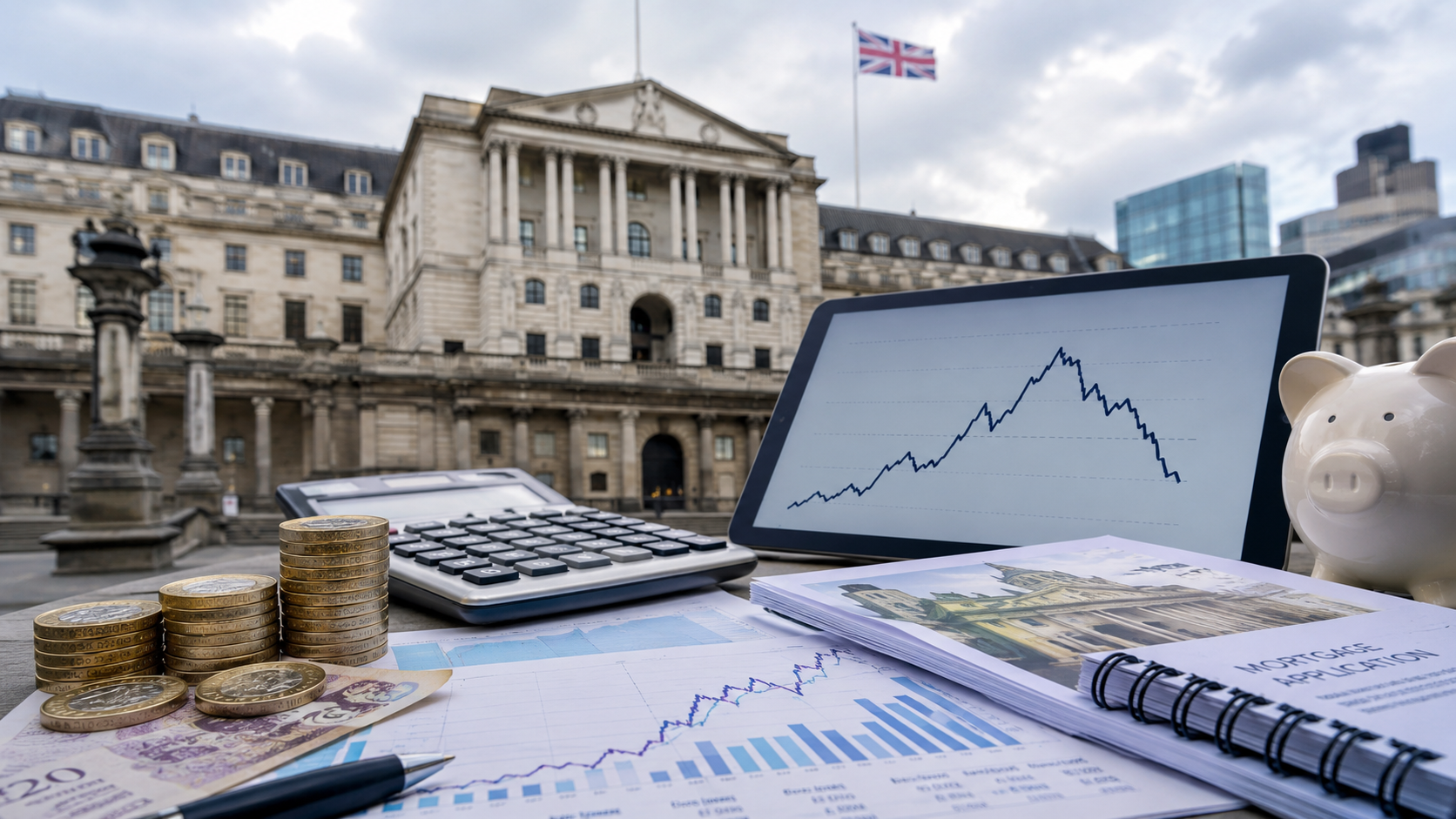

Many people search for “how does Bank of England interest rates work” because the subject can sound confusing. The basic idea is simple. The Bank of England sets one important interest rate called Bank Rate. This rate influences the interest charged on many loans and the interest paid on many savings accounts in the United Kingdom.
The Bank of England does not choose the exact rate on every mortgage, credit card, business loan, or savings account. Bank Rate works more like a starting signal. When Bank Rate changes, other interest rates often move as well. This can change how much people borrow, save, and spend.
The Bank of England uses Bank Rate mainly to help control inflation. The UK Government has given the Bank an inflation target of 2% over the medium term. Inflation means the speed at which the prices of goods and services rise.
More Article: Best Tools and Resources for Apprenticeships in the UK
What Is Bank Rate?
Bank Rate is the main interest rate set by the Bank of England. It is the rate paid on certain overnight deposits held at the Bank of England by eligible financial companies, such as commercial banks and building societies.
Bank Rate is important because it influences short-term financial-market rates. These market rates then affect the interest that banks charge borrowers and pay savers.
Think of Bank Rate as the first domino in a long line. When the Bank of England moves the first domino, it can help move many other interest rates. However, customer rates may change by different amounts and at different speeds.
Who Decides the Bank of England Interest Rate?
Bank Rate is decided by the Monetary Policy Committee, which is normally called the MPC. The committee has nine voting members. These members include Bank of England officials and independent experts from outside the Bank.
The members study information about inflation, wages, jobs, spending, business activity, and economic growth. Each member then votes to raise Bank Rate, lower it, or leave it unchanged.
The MPC normally announces an interest-rate decision eight times a year, or about once every six weeks. The Bank publishes the result of the vote and explains why the decision was made.
How Higher Bank of England Interest Rates Work
When the Bank of England raises Bank Rate, borrowing usually becomes more expensive. Banks may charge higher rates on new mortgages, personal loans, credit cards, and business borrowing.
Some savings accounts may also offer better returns. This can encourage people to save more of their money instead of spending it.
Higher loan payments may leave households with less money for shopping, entertainment, travel, and other purchases. Businesses may also delay borrowing money, buying equipment, opening new locations, or hiring more workers.
When people and businesses spend less, companies may find it harder to raise their prices quickly. This can help inflation fall over time.
Higher interest rates do not normally make prices fall immediately. Their main purpose is to slow the speed at which prices are rising.
How Lower Bank of England Interest Rates Work
When Bank Rate falls, borrowing will often become cheaper. Banks may reduce the rates charged on certain mortgages, loans, and other forms of credit. However, they do not have to reduce every customer rate by the same amount.
Lower borrowing costs may give households more money to spend. Businesses may also find it cheaper to borrow money for equipment, buildings, staff, or expansion.
Savings accounts may pay less interest when Bank Rate falls. This can make saving less attractive and may encourage people to spend or invest more.
Extra spending can support businesses, jobs, and economic growth. However, spending that grows too quickly can increase inflation. If demand becomes stronger than the supply of goods and services, businesses may raise their prices.
The Bank of England therefore tries to choose a Bank Rate that supports stable prices without creating unnecessary weakness in the economy.
How Bank Rate Affects Mortgages
Bank Rate influences mortgage rates, but it does not control them exactly. The effect depends partly on the type of mortgage a person has.
A tracker mortgage may respond quickly because its rate is connected to Bank Rate or another reference rate. When the reference rate rises or falls, the mortgage rate may also change.
A fixed-rate mortgage normally keeps the same interest rate until its fixed period ends. Someone with a fixed-rate deal may therefore see no immediate change after a Bank Rate decision. The effect may only appear when the person applies for a new mortgage deal.
Mortgage lenders also consider market funding costs, competition, the length of the mortgage, the size of the deposit, and the risk that a borrower may not repay the loan. This is why mortgage rates are normally different from Bank Rate.
How Bank Rate Affects Loans and Savings
When Bank Rate rises, banks will often increase the cost of some personal and business loans. Credit card rates may also rise, although each lender sets its own prices and rules.
Savings rates often rise too, but they may not increase immediately or by the same amount as Bank Rate. Every bank decides what it will pay savers based on its costs, funding needs, business plans, and competition.
Banks normally charge borrowers more interest than they pay savers. The difference helps banks cover operating costs and the risk of customers failing to repay their loans.
This explains why a savings account may pay less than Bank Rate while a loan charges much more than Bank Rate.
Why Interest-Rate Changes Take Time
A Bank Rate decision does not affect every household and business on the same day. Many people have fixed mortgage deals. Businesses may already have loans with agreed rates. Banks also update their financial products at different times.
The Bank of England says monetary policy can take around 18 to 24 months to have its full effect on the economy. This is why the MPC must look ahead. Members consider where inflation might be in the future rather than looking only at today’s inflation rate.
This delay is an important part of understanding how does Bank of England interest rates work. A rate increase may reduce spending slowly, while a rate reduction may support borrowing and spending over many months.
FAQ: Does the Bank of England Set My Mortgage Rate?
No. The Bank of England sets Bank Rate, but your mortgage lender chooses your mortgage rate. The lender considers Bank Rate, market costs, the type and length of the mortgage, competition, and the risk involved in lending you money.
FAQ: Do Savings Rates Rise When Bank Rate Rises?
Savings rates often rise after Bank Rate increases, but they may not rise immediately or by the same amount. Each bank sets its savings rates according to its costs, funding needs, plans, and competition from other banks.
FAQ: Why Does the Bank of England Raise Interest Rates?
The Bank normally raises Bank Rate when it believes spending pressure must slow to help inflation return towards the 2% target. Higher rates make borrowing more expensive and saving more attractive, which can reduce demand.
FAQ: Why Does the Bank of England Cut Interest Rates?
The Bank may reduce Bank Rate when inflation pressure is low enough and the economy needs more support. Lower rates can encourage borrowing, household spending, and business investment.
FAQ: How Quickly Do Interest-Rate Changes Affect People?
Tracker and variable rates may change fairly quickly. People with fixed-rate loans may not feel the effect until their deals end. The wider effect on spending, businesses, jobs, and inflation can take many months and may take around 18 to 24 months to appear fully.
Conclusion
The clearest answer to “how does Bank of England interest rates work” is that the Bank sets Bank Rate to influence borrowing, saving, spending, and inflation throughout the UK.
The nine-member Monetary Policy Committee studies the economy and votes on Bank Rate about once every six weeks. Members can raise the rate, lower it, or keep it unchanged.
A higher Bank Rate usually makes borrowing more expensive and saving more rewarding. This can reduce spending and help slow inflation. A lower Bank Rate normally makes borrowing cheaper and saving less rewarding. This can encourage spending, investment, and economic activity.
Bank Rate does not change every mortgage, loan, or savings account immediately. Commercial banks choose their own customer rates, and fixed financial deals can delay the effect.
Even so, Bank Rate remains the main signal guiding UK interest rates. Its purpose is not to punish borrowers or reward savers. Its main purpose is to help prices rise slowly and steadily so that households and businesses can plan for the future with greater confidence.
Read also: How to Get Started With Becoming a Sole Trader in the UK