
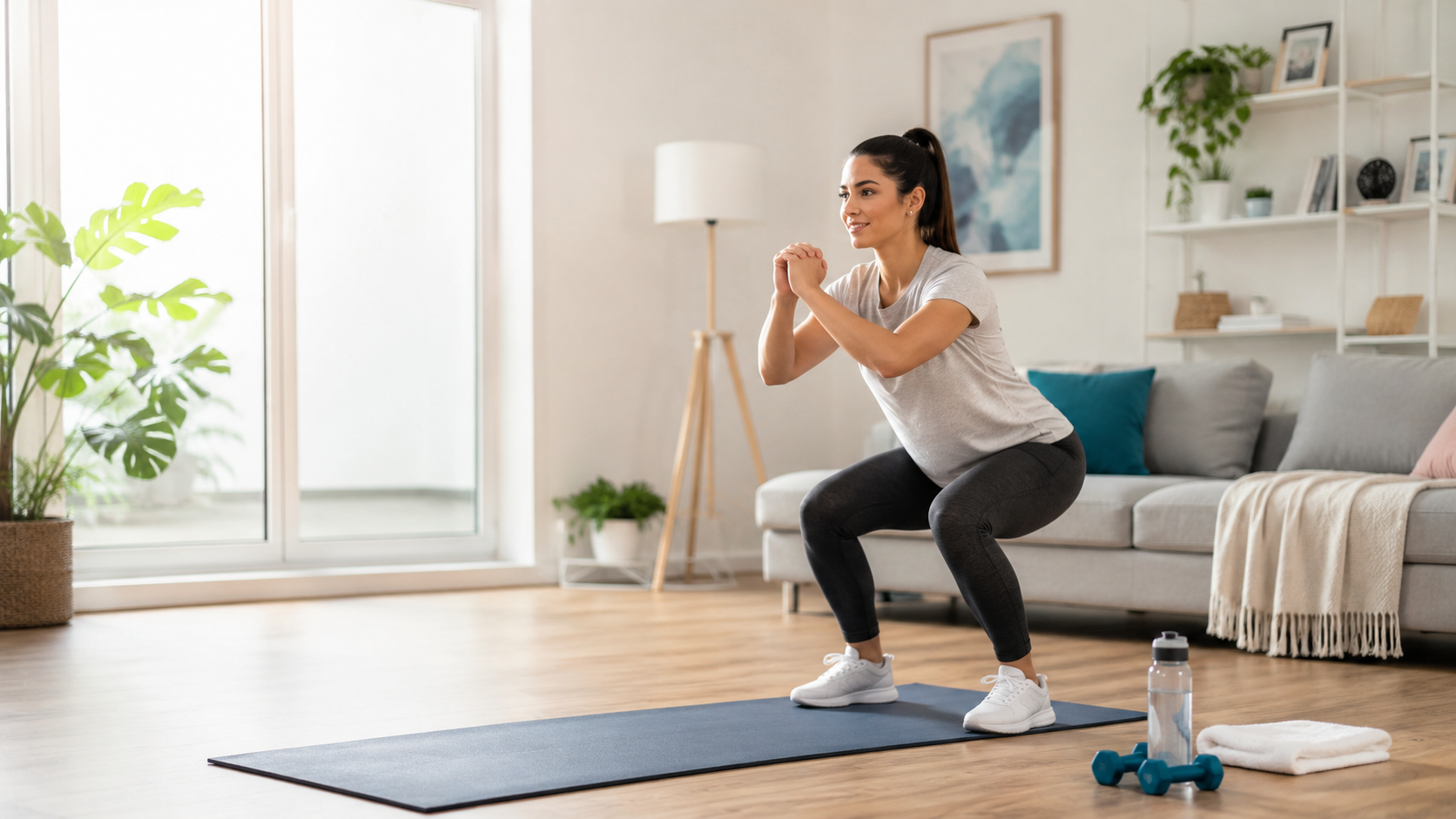

Starting an exercise routine at home does not require a gym membership, expensive equipment, or an hour of free time. The best ideas for beginner home workouts are simple movements you can learn quickly, repeat safely, and adjust as your fitness improves. A useful routine should include basic strength work, light cardio, mobility, and enough recovery to stay consistent. Federal guidance encourages adults to build toward 150 minutes of moderate-intensity aerobic activity each week plus muscle-strengthening on at least two days, but beginners can start with much shorter sessions and increase gradually.
What Makes a Home Workout Beginner-Friendly?
A good beginner workout is easy to understand, needs little setup, and can be scaled down when necessary. You should be able to focus on controlled movement instead of complicated combinations.
Bodyweight exercises are enough to get started. Chair squats, wall push-ups, glute bridges, bird dogs, calf raises, and supported lunges can train major muscle groups without specialized equipment. The CDC recommends strength work that covers the legs, hips, back, abdomen, chest, shoulders, and arms.
“Some physical activity is better than none.” — CDC
That principle matters for beginners. A 10-minute routine completed consistently is more useful than an overly demanding plan you quickly abandon.
7 Best Ideas for Beginner Home Workouts
1. Try a 10-Minute Full-Body Circuit
A short circuit combines several movement patterns without requiring a long session.
Try:
- 8–12 chair squats
- 8–12 wall push-ups
- 10 glute bridges
- 6–10 bird dogs per side
- 30–60 seconds of marching in place
Rest as needed. Repeat once if you feel comfortable. CDC guidance uses 8–12 repetitions as a practical range for strengthening exercises and notes that one set can be effective.
2. Walk or March in Place
You do not need a treadmill for indoor cardio. March in place, walk around your rooms, step side to side, or take repeated hallway laps.
For moderate-intensity activity, use the “talk test”: you should be breathing harder but still able to talk, while singing would be difficult. Start with 5–10 minutes and add time gradually.
3. Use a Chair for Strength and Support
A sturdy chair can make strength exercises more approachable. Sit-to-stands train the lower body, while incline push-ups with hands on a stable surface reduce the difficulty of floor push-ups.
The NHS includes stable-chair exercises in its gentle strength guidance and advises using a solid chair that will not slip or roll.
4. Build a Basic Bodyweight Strength Day
Once the movements feel familiar, combine them into one simple session:
| Exercise | Beginner Target | Main Area |
|---|---|---|
| Chair squat | 8–12 reps | Legs and hips |
| Wall or counter push-up | 8–12 reps | Chest, shoulders, arms |
| Glute bridge | 8–12 reps | Glutes and hips |
| Bird dog | 6–10 per side | Core and back |
| Calf raise | 10–15 reps | Calves |
| Dead bug | 6–10 per side | Core |
Perform one controlled set at first. When it becomes easy, add repetitions, another set, or a slightly harder variation. This follows the basic principle of gradually increasing the challenge rather than jumping immediately into high-volume training.
5. Do Dance Cardio
Put on a few songs and move continuously for 10–20 minutes. Step touches, easy knee lifts, arm swings, and simple dance movements can turn a living room into a cardio space.
Fast dancing is included in federal physical activity guidance as an example of moderate-intensity aerobic activity. The practical advantage is simple: if you enjoy a type of movement, fitting it into your routine may feel less like a chore.
6. Add Mobility Sessions
Not every workout needs to be hard. A short mobility session can include shoulder circles, cat-cow movements, gentle hip hinges, ankle circles, and controlled torso rotations.
Use mobility as a light session between strength days or as part of a warm-up. The NHS recommends warming up before exercise and provides an example routine lasting at least six minutes. Avoid forcing a stretch into pain.
7. Use Short “Exercise Snacks”
A workout does not have to happen in one uninterrupted block. Five minutes in the morning, five minutes at lunch, and another short session in the evening can add up.
Current CDC guidance allows aerobic activity to be broken into smaller chunks across the week. This approach can be particularly practical when work, family responsibilities, or a busy schedule makes a longer workout difficult.
A Simple 7-Day Beginner Home Workout Plan
The first few weeks should focus on consistency, not exhaustion.
Monday: 10–15 minute full-body strength circuit
Tuesday: 10–20 minutes of walking in place or easy dance cardio
Wednesday: Rest or gentle mobility
Thursday: 10–15 minute full-body strength circuit
Friday: 10–20 minutes of low-impact cardio
Saturday: Optional easy walk or mobility session
Sunday: Rest
If this schedule feels like too much, shorten the sessions. CDC guidance for people getting started recommends beginning slowly and building toward more time or more challenging activity.
The schedule also leaves space between strength sessions, which can make a new routine easier to manage. The important point is not to complete every session perfectly. It is to establish a pattern you can realistically continue.
How to Progress Without Buying Equipment
Once an exercise becomes easy with good form, change one variable at a time. Add a few repetitions, perform a second set, slow the lowering phase, reduce the amount of support you use, or move to a harder exercise variation.
For example, a beginner may start with a wall push-up, progress to a push-up against a counter, and eventually try a lower surface. Chair squats can gradually become free-standing bodyweight squats.
CDC guidance similarly recommends starting slowly and working toward longer or more challenging activities rather than increasing everything at once.
Progress should make an exercise more challenging without turning every session into an exhausting test.
Common Beginner Workout Mistakes to Avoid
Doing too much too soon is one of the easiest ways to make a new exercise routine difficult to maintain. A beginner does not need to copy the volume, intensity, or exercise variations used by someone who has trained for years. Gradual progression matches public-health guidance for people starting physical activity.
Another mistake is treating speed as a sign of workout quality. For basic bodyweight movements, concentrate on controlled repetitions and an exercise variation you can perform comfortably instead of racing through the session.
Pain and unusual symptoms should not be treated as proof that a workout is effective. MedlinePlus advises stopping exercise and seeking help for symptoms such as pain, extreme shortness of breath, or dizziness. It also recommends that people who have health concerns speak with a healthcare professional when starting exercise.
How Hard Should a Beginner Home Workout Feel?
A beginner workout should feel like exercise without making you feel completely spent after every session.
During moderate aerobic activity, the CDC’s talk-test guidance provides an easy way to estimate intensity: you should generally be able to talk but not sing comfortably.
Strength exercises should become challenging near the end of a set while still allowing controlled movement. CDC guidance suggests 8–12 repetitions per strengthening exercise as a useful target and notes that additional sets can be added for greater benefit.
There is no advantage in rushing to the hardest variation. Good beginner training gives your body and your exercise skills time to adapt.
FAQs About Beginner Home Workouts
What is the best home workout for a complete beginner?
A short full-body routine with chair squats, wall push-ups, glute bridges, bird dogs, and marching in place is a practical starting point. It covers several major muscle groups while adding light aerobic movement and requires no dedicated gym equipment.
How long should a beginner work out at home?
There is no rule that a first workout must last 30 or 60 minutes. Start with a duration you can complete comfortably, even if that means only 5–15 minutes, then build gradually. Public-health guidance supports starting slowly and increasing physical activity over time.
Can you get fit at home without equipment?
Yes. Bodyweight movements can provide resistance for muscle-strengthening exercises, while marching, dancing, brisk walking, and similar continuous activities can provide aerobic exercise. The NHS specifically recognizes bodyweight work as a form of muscle-strengthening activity.
How many days a week should a beginner exercise?
Two strength sessions plus several manageable aerobic sessions is a practical beginner structure, with recovery days when needed. Adults are ultimately encouraged to perform muscle-strengthening activity on at least two days each week and work toward recommended aerobic activity levels.
Should beginners work out every day?
Not necessarily. Daily movement can be light, but demanding workouts do not need to happen every day. A beginner routine can alternate strength training, cardio, mobility work, lighter activity, and rest.
What if I cannot do a push-up or squat?
Choose an easier variation rather than skipping the movement entirely. Try push-ups against a wall or counter and perform squats using a sturdy chair as a target or support. As your strength and control improve, gradually move toward harder variations.
Conclusion
The best ideas for beginner home workouts are the ones that remove unnecessary barriers: basic bodyweight strength exercises, walking or marching, dance cardio, mobility work, chair-supported movements, and short activity breaks. Start with sessions you can realistically repeat, learn the movements, and increase the challenge gradually. A home workout does not need to be complicated or exhausting to be useful. The strongest beginner plan is one that matches your current ability, fits into your schedule, and gives you a clear path to progress.
Read also: TimeWarp TaskUs: What the Portal Is and How to Access It Safely