

In cigarette manufacturing, downtime rarely starts with a dramatic machine failure. More often, it begins with something smaller: a short interruption, a delayed transfer, a packing issue or an operator waiting for one stage of the process to catch up with another.
Multiply those moments across a full production shift and the cost becomes significant. This is why production line automation is not simply about producing faster. It is about keeping the entire process moving with fewer interruptions.
Automation is about flow, not just speed
A cigarette production line consists of several connected stages. Making or filling the cigarette is only part of the process. The product then has to move efficiently through packing, wrapping and other finishing operations.
If one stage consistently operates slower than the others, it becomes a bottleneck. Increasing the speed of the other machines will not solve the problem. It may simply create more products waiting between stages.
Effective automation focuses on the balance between those processes. The objective is a production flow in which each machine supports the next one instead of creating additional waiting time.
Where downtime hides
Not every minute of downtime appears in a maintenance report. Short stops can be just as damaging as major breakdowns when they happen repeatedly.
Cleaning, adjustments, material changes, minor faults and manual interventions can gradually reduce the amount of productive time available during a shift. A well-designed production setup helps operators identify these interruptions and return the line to normal operation more quickly. That can make a substantial difference without increasing the nominal speed of the machines.
Connecting production stages
Automation becomes particularly valuable when several machines need to work together. A cigarette maker, injector, packer or overwrapper should not be viewed only as an individual piece of equipment.
Their performance affects the rest of the line. If cigarettes arrive inconsistently at the packing stage, or finished packs cannot keep up with production, efficiency falls even if the individual machines are technically capable of higher output. Coordinating these stages helps reduce bottlenecks and makes production capacity more usable.
Efficiency also means fewer corrections
A production line can lose efficiency without ever completely stopping. Operators may need to repeatedly adjust settings, remove defective products or deal with inconsistent material flow. Reducing these small corrections is one of the less visible benefits of automation. Stable processes allow teams to focus on monitoring production rather than constantly fixing it. The result is a more predictable shift, better use of labour and less unnecessary waste.
Turning downtime into productive time
The real value of automation is not measured by how impressive a machine looks when it is running at maximum speed. It is measured by how much useful production it delivers across an entire shift.
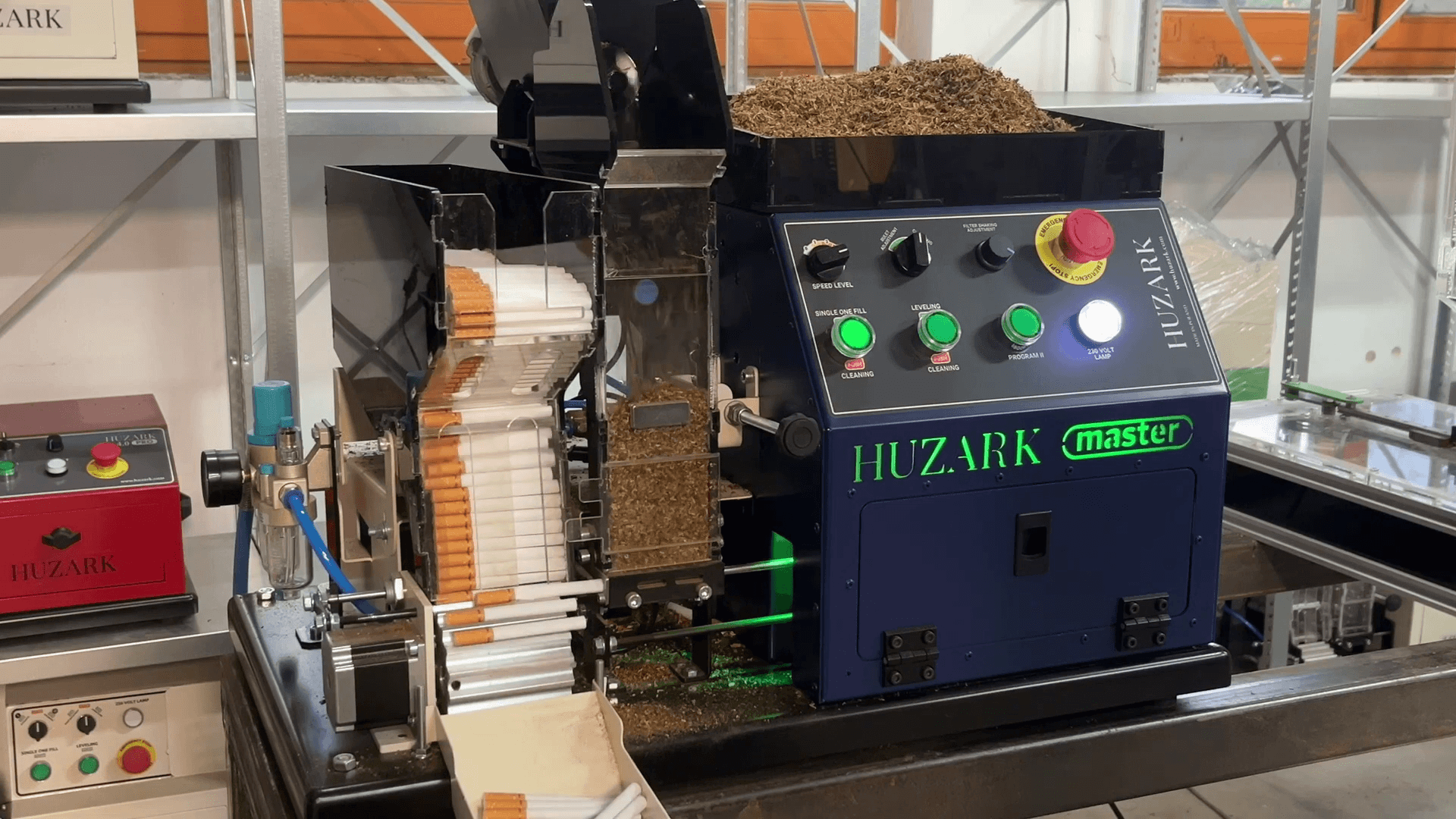
This is the approach behind Huzark solutions. Its pneumatic machines, powered by compressed air, can support different stages of cigarette production, from making and filling to packing and overwrapping. Rather than treating downtime as an unavoidable part of manufacturing, Huzark focuses on building a more coordinated production flow — one where machines work together, operators have fewer problems to correct and more of the scheduled shift becomes genuinely productive time.