
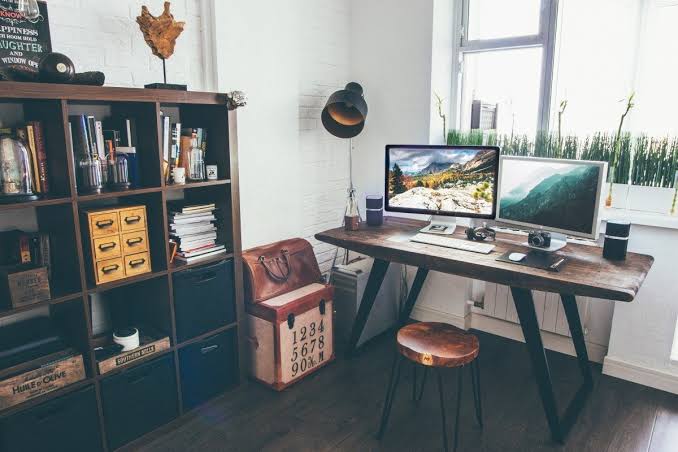

Most people learn how to set up a small workspace the hard way. They start with a laptop on the sofa, move to the kitchen table, then realise a few weeks in that their neck hurts and their paperwork is taking over the house. The good news is that a decent home office doesn’t need a spare room. It needs a bit of planning and a few well-chosen pieces.
Pick a spot and stick with it
The first step is committing to one place. A corner of the bedroom, the space under the stairs, an alcove in the living room: any of them can work, provided it’s yours during working hours. Having a dedicated spot helps your brain switch into work mode, and it makes it easier to switch off at the end of the day.
Look for somewhere with decent natural light and as little foot traffic as you can manage. If you can, position the desk so that the window sits to one side rather than directly behind your screen.
Choose furniture that does more than one job
In a small space, every item has to earn its place. A slim desk or a fold-down wall-mounted one takes up very little room, and a unit with built-in shelves or drawers keeps essentials close. If you share the room with other people or other activities, look for pieces that can be tidied away quickly.
Storage deserves as much thought as the desk. Paperwork, chargers and stationery pile up faster than you’d expect, and clutter makes a small room feel even smaller. A slim set of lockers works well here, because it holds a surprising amount, keeps everything behind closed doors and takes up very little floor space. When the working day ends, you can shut everything away and the room goes back to being part of your home.
Don’t scrimp on the chair
It’s tempting to save space by squeezing in a dining chair or a fold-up stool. Resist that urge. If you’re sitting for several hours a day, the chair is the piece that will have the biggest effect on how you feel.
Good ergonomic office chairs are designed to support the lower back and let you adjust height, armrests and seat depth to suit your body. In a compact room there’s often less opportunity to move about, so proper support matters even more. Look for a slimmer model that tucks neatly under the desk, and check that it still offers lumbar support and a smooth height adjustment.
Get the screen and desk heights right
Even the best chair can’t make up for a badly placed screen. Aim to have the top of your monitor roughly level with your eyes, about an arm’s length away. If you’re working on a laptop, a stand and a separate keyboard make a big difference, because hunching over a small screen for hours is one of the quickest routes to a sore neck.
Your desk should let your elbows rest at roughly a right angle when you type. If it’s too high, a footrest and an adjustable chair can help. If it’s too low, small risers under the legs are a cheap fix.
Build in movement as well. Setting a reminder to stand up every hour, stretch your shoulders and look away from the screen for a minute helps more than you’d think, particularly in a compact room where it’s easy to stay glued to one spot all day.
Light, cables and clutter
A few finishing touches make a big difference in a small space. A desk lamp helps with darker afternoons, and cable clips keep wires from turning into a tangle. Try to keep your desk clear apart from the things you use every day, and set aside ten minutes at the end of each week to put everything back where it belongs.
Plants and a bit of artwork help the space feel pleasant, though it’s worth keeping them modest so the desk doesn’t become overcrowded.
If the room doubles as something else, such as a guest bedroom, think about where the laptop and paperwork go at the end of the day. A box or a shelf that’s clearly for work items makes the daily reset take seconds rather than minutes.
Make it feel separate
If your office shares a room, small cues can help mark the boundary. A screen, a rug or even a particular lamp that you switch on only when you’re working can all signal that the area has a different purpose. When you finish, switching it off tells your brain the day’s done.
Think about sound and comfort
Small rooms can be noisy, particularly if you’re sharing the house. A rug, curtains or soft furnishings take the edge off echoes, and a pair of decent headphones can help on busy days. Temperature matters too. A room that’s too warm or too cold makes it harder to concentrate, so a small fan or heater and a bit of ventilation are worth having to hand.
A little planning goes a long way
Setting up a home office in a small space is really about prioritising. Spend where it matters most, which is the chair and decent storage, keep the rest simple, and adjust as you go. You don’t need acres of room to work comfortably, just a setup that supports you and doesn’t take over the house.