

Over the last few years, conversations around ecommerce growth in Southeast Asia have focused heavily on consumer demand. More people shopping online, increasing mobile penetration, rising digital payments, and marketplace expansion have all contributed to the rapid development of the region’s ecommerce economy.
But as the market matures, especially in fast-growing regions like e-commerce in the Philippines, businesses are beginning to discover that demand generation is no longer the hardest part of scaling.
The real challenge now is operational execution.
Many ecommerce businesses can successfully attract customers, launch campaigns, and generate strong order volumes. Yet profitability, customer satisfaction, and long-term scalability increasingly depend on something far less visible: how efficiently orders move through warehouse operations.
This shift is reshaping how businesses think about growth. Warehouses are no longer viewed simply as storage facilities or backend operational units. They are becoming strategic assets capable of influencing delivery speed, inventory utilization, customer experience, and even business profitability.
In many ways, warehouse efficiency is becoming one of the most important competitive advantages in Philippine ecommerce today.
Why Ecommerce Growth in the Philippines Creates Unique Operational Pressure
The Philippines presents one of the most dynamic ecommerce opportunities in Southeast Asia. Internet adoption continues rising, mobile commerce dominates online purchasing behavior, and younger consumers are increasingly comfortable shopping digitally across multiple categories.
At the same time, the country’s geography creates operational realities that are very different from more centralized markets.
The Philippines is made up of thousands of islands, which means inventory distribution, transportation coordination, and fulfillment planning are naturally more complex. Businesses cannot rely on a single operational model to serve the entire market efficiently.
As ecommerce volume grows, several challenges become more visible:
- Inventory must support geographically distributed demand
- Delivery timelines vary significantly by region
- Order surges create warehouse bottlenecks quickly
- Fulfillment costs can increase rapidly without operational optimization
- Inventory visibility becomes harder across multiple locations
In this environment, warehouse operations are not simply supporting ecommerce growth—they are actively determining whether growth remains sustainable.
The Shift From Sales Scalability to Fulfillment Scalability
One of the biggest misconceptions in ecommerce is assuming that operational systems naturally scale alongside revenue growth. In reality, sales often scale much faster than fulfillment capability.
This creates what many growing ecommerce businesses experience as “invisible operational strain.”
At first, the business appears successful because orders are increasing. But internally, warehouse teams begin dealing with:
- Slower picking and packing processes
- Higher fulfillment error rates
- Inventory discrepancies
- Delayed order dispatch
- Increasing labor dependency
- Growing customer service escalations
These issues usually emerge gradually, making them easy to overlook during periods of rapid revenue growth.
However, over time, operational inefficiencies begin impacting customer retention, profitability, and scalability.
Businesses eventually realize that generating more orders is no longer the challenge—processing those orders consistently and efficiently becomes the real growth constraint.
Why Modern Warehouses Need Real-Time Coordination
Traditional warehouse models were designed primarily for storage and distribution efficiency. Ecommerce changes this completely because fulfillment environments now operate continuously and dynamically.
Orders arrive in real time across multiple channels. Inventory levels shift constantly. Customer expectations demand faster processing and delivery.
This creates an operational environment where manual coordination becomes increasingly difficult.
For example, warehouse teams may struggle with:
- Prioritizing orders efficiently during peak periods
- Locating inventory quickly across growing SKU catalogs
- Maintaining accurate inventory visibility
- Coordinating replenishment without disrupting fulfillment
- Managing returns alongside outbound operations
As order volumes grow, these operational pressures compound quickly.
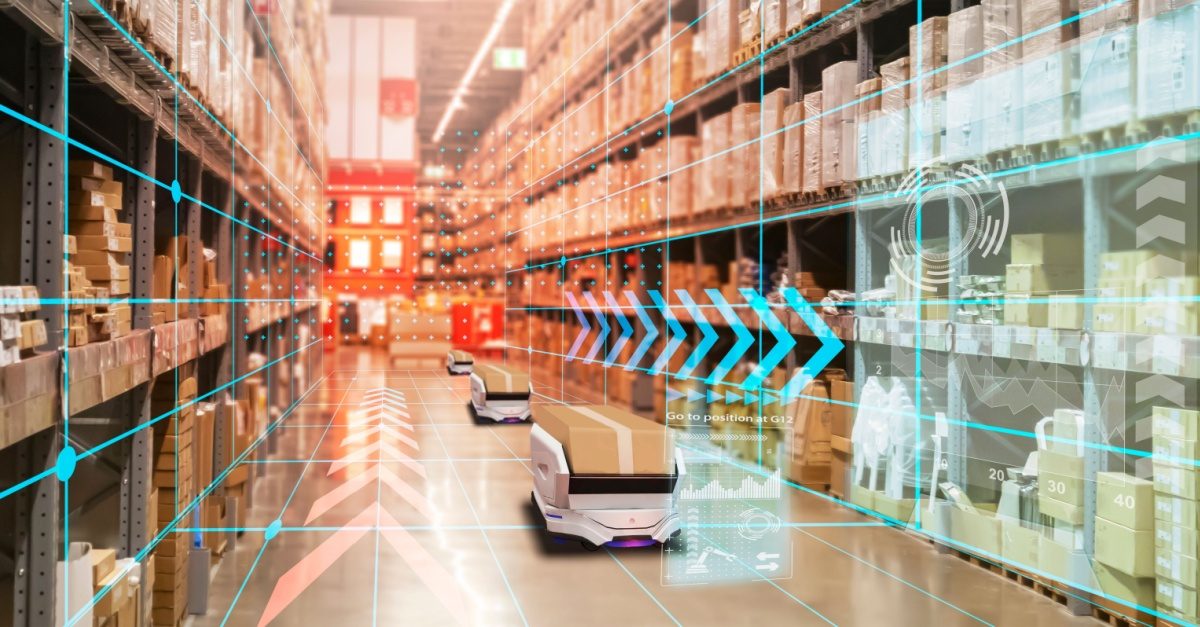
This is why businesses are increasingly adopting a wms system to coordinate warehouse execution more intelligently.
Rather than relying on manual oversight, warehouse management systems structure operational workflows systematically. They help businesses organize inventory movement, optimize picking paths, improve inventory accuracy, and create real-time operational visibility across fulfillment activities.
The goal is not simply warehouse automation—it is operational synchronization.
Why Inventory Visibility Becomes a Competitive Advantage
One of the biggest operational differences between smaller ecommerce businesses and more mature ecommerce operations is inventory confidence.
Smaller businesses often rely heavily on manual verification and operational workarounds. Teams compensate for inventory uncertainty through overstocking, internal coordination, and reactive fulfillment management.
But as businesses scale, this approach becomes increasingly expensive and inefficient.
Real-time inventory visibility becomes critical because it directly influences:
- Order allocation speed
- Replenishment planning
- Customer delivery accuracy
- Marketplace inventory synchronization
- Inventory turnover efficiency
A strong warehouse management system improves this visibility by ensuring inventory updates continuously as products move through receiving, storage, picking, packing, and shipping workflows.
This operational transparency allows businesses to make faster and more accurate fulfillment decisions without relying heavily on manual intervention.
In highly competitive ecommerce markets, faster operational decisions often translate directly into better customer experiences.
The Growing Importance of Fulfillment Speed in Philippine Ecommerce
Customer expectations in the Philippines are evolving rapidly. As marketplaces and ecommerce platforms improve delivery standards, buyers increasingly expect:
- Faster delivery timelines
- Accurate inventory availability
- Reliable order tracking
- Consistent fulfillment performance
This creates significant pressure on ecommerce businesses because fulfillment speed is no longer just a logistics metric—it directly affects customer trust and repeat purchase behavior.
Warehouses therefore play a much larger role in customer experience than many businesses realize.
A delayed order, inaccurate stock update, or fulfillment bottleneck can negatively impact customer perception even when product quality and pricing remain competitive.
Businesses that optimize warehouse operations effectively are often able to deliver more consistent customer experiences without relying solely on aggressive discounting or marketing spend.
Why Warehouse Efficiency Impacts Profitability More Than Businesses Expect
Many ecommerce businesses initially focus heavily on revenue growth while underestimating how operational inefficiencies affect profitability.
But warehouse inefficiencies create compounding financial pressure over time through:
- Higher labor costs
- Increased fulfillment errors
- Slower inventory turnover
- Excess safety stock
- Increased shipping inefficiencies
- Greater customer support workload
As ecommerce competition intensifies, businesses with inefficient warehouse operations often find their margins shrinking despite growing order volumes.
Warehouse efficiency therefore becomes not just an operational concern, but a financial one as well.
Businesses that streamline fulfillment operations can improve profitability without necessarily increasing prices or reducing service quality.
Why Operational Agility Will Define the Next Phase of Ecommerce Growth
The next stage of ecommerce growth in the Philippines will likely depend less on simply attracting more customers and more on building operational systems capable of adapting quickly to changing market conditions.
This includes responding effectively to:
- Demand spikes during campaigns and seasonal events
- Expansion into new geographic regions
- Rapidly changing product assortments
- Increasing omnichannel complexity
Businesses with rigid or heavily manual warehouse operations often struggle to adapt quickly because operational changes require significant coordination effort.
Companies using modern warehouse systems gain greater operational flexibility because workflows, inventory coordination, and fulfillment processes can evolve more dynamically alongside business growth.
This adaptability is becoming increasingly valuable in fast-changing ecommerce environments.
Conclusion
The growth of e-commerce in the Philippines is creating enormous opportunities for businesses across the region. But as the market matures, operational execution is becoming just as important as customer acquisition and sales growth.
Warehouse operations now influence fulfillment speed, inventory visibility, profitability, and customer experience directly. Businesses that continue treating warehouses simply as storage facilities may struggle to maintain efficiency as operational complexity grows.
By investing in a scalable wms system, ecommerce businesses can build fulfillment operations capable of supporting long-term growth while improving operational visibility, warehouse coordination, and customer satisfaction.
In the coming years, the most successful ecommerce businesses in the Philippines may not necessarily be the ones generating the most demand—but the ones most capable of fulfilling that demand efficiently, consistently, and at scale.