
Procurement has transitioned from merely an operational practice to a strategic business practice, enabling more effective operations, supplier relationships, and better informed purchasing decisions. Similarly, these days, organizations are looking for ways to streamline sourcing activities without compromising transparency and/or control over their procurement processes.
This change has spurred the rise of autonomous sourcing software, a technology that combines AI-powered automation with human collaboration to enhance the productivity of procurement teams in organizing sourcing events. With fewer repetitive tasks and improved decision-making capabilities, modern sourcing solutions can enable companies to construct an even more efficient procurement process.
Understanding Autonomous Sourcing
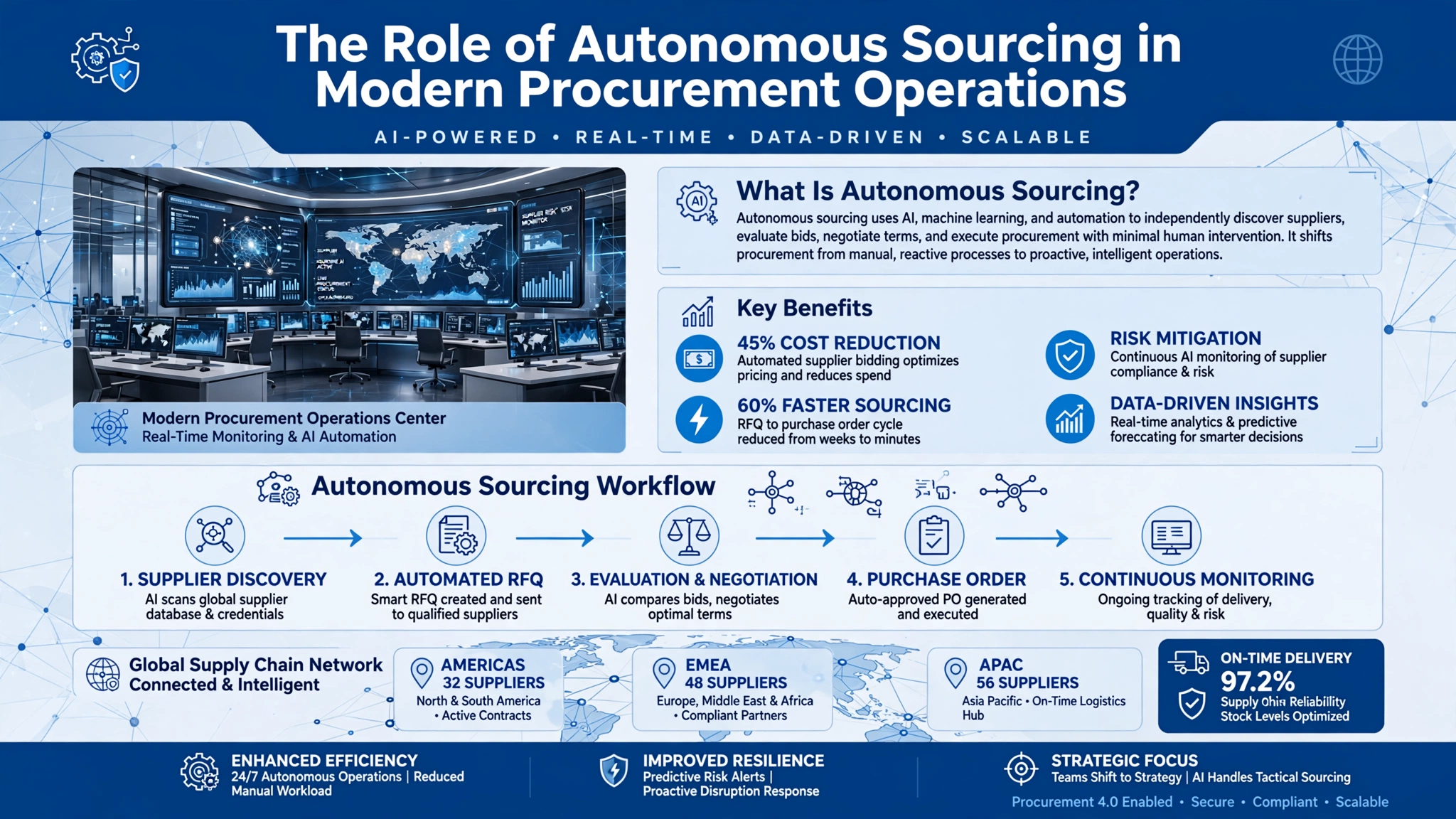
Autonomous sourcing is when sourcing technology is automatically run using AI and not run by sourcing professionals, although key approvals and decisions will be made by sourcing professionals. Traditional techniques are inefficient and error-prone when it comes to sourcing, especially managing purchase requisitions, supplier communications, negotiation, and vendor selection. Some intelligent workflows can help automate this process, from the purchase requisition to the supplier, through the negotiation process, and even to the final selection of the vendor.
To assist, not replace, procurement professionals and help free up their time to concentrate on strategic sourcing activities. Automation can also assure uniformity of sourcing and provide greater visibility in procurement.
How AI Supports Procurement Workflows
With the use of automated tools for sourcing, AI assists in saving time and securing procurement professionals’ engagement in crucial approvals and decisions. Autonomous sourcing software will save you a great deal of manual labor, assist in controlling sourcing procedures, and increase the efficiency of sourcing procedures at all stages of its lifecycle.
There are several ways in which an autonomous sourcing tool may be useful in your procurement process:
- Purchase Requisition Consolidation: Collects purchase requisitions according to categories, locations, and quantities to prevent over-sourcing and facilitates a more efficient approach to purchasing.
- Automatic RFP Generation: Uses sourcing events or previously developed questionnaires to generate all the required questions and data needed for your RFP. The procurement teams are allowed to edit these documents prior to sending them to the suppliers.
- AI-Facilitated Negotiation: Proposes counteroffers taking into account past procurement transactions; allows procurement professionals to accept, modify, or reject these offers, thus maintaining the negotiation under control.
- Supplier Evaluation and Selection: Total Cost of Ownership (TCO) analysis together with technical and commercial evaluation criteria; supplier approval to select the supplier is in the hands of the procurement team.
- Human Oversight Throughout the Process: Eliminates repetitive sourcing activities and enables decision-making for procurement professionals to occur at each and every important moment.
Supporting Better Capital Investments
For those companies that invest in the long term, it might be necessary to have a specific procurement stage to make sure the purchases are doing what the business wants them to accomplish. This is especially significant when businesses are looking to buy assets during capex procurement, or large equipment, as these assets are intended to help fund a company’s growth.
Some of the things that they may invest in include equipment, technology, infrastructure, software, and/or facility expansions. These acquisitions typically are made with substantial monetary investments, so procurement teams need to be well organized to undertake sourcing activities, evaluate suppliers, and obtain financial information.
Modern procurement technology can enable the streamlining of those sourcing activities and have a positive impact on governance and visibility in procurement.
The Importance of Structured Procurement Processes
To execute effective procurement, one should have clearly defined processes and procedures that should be followed while sourcing, from planning to implementation.
When it comes to a structured procurement process, the process often starts with defining business goals and comprehending the requirements for procurement. Next, a financial assessment is done to confirm whether budgets are appropriate and investments are appropriate to the organization’s priorities.
Supplier Evaluation is very important because it enables you to judge suppliers by comparing them according to various criteria such as quality, compliance, and commercial. Post-purchase and post-purchase analysis are used to plan and choose long-term value-supplying suppliers and purchases.
These guidelines prove to be extremely useful in capex procurements, where decision-making can require the input of various stakeholders, financial analysis or reviews, and business planning for over a year.
Procurement Benefits Through Intelligent Automation
Automation has proven to deliver measurable benefits to procurement activities at each stage of the process, including tasks that involve purchasing multitudes of identical items or products from vendors.
AI-powered workflows can help shorten procurement cycle times by automating repetitive tasks in the procurement process. Approval processes are already faster, thus boosting operational efficiency; in addition, procurement teams can now see their activities.
Expanded supplier cooperation is also enhanced via the central sourcing workflows. Sourcing events, supplier response, and sourcing recommendations can be done all within one connected experience for procurement professionals. Organizations can enhance procurement governance and provide transparency in procurement operations with audit trails, role-based workflows, ERP Capabilities, and spend visibility.
Building Long-Term Procurement Value
Success in procurement in the long term is achieved through a combination of technology and decision-making processes. Companies gain an advantage when their procurement practices align with their goals while staying within budget limits.
In the case of investment-based purchasing, capex procurement involves careful planning, consultation, financial analysis, assessment of suppliers, and implementation monitoring. An
AI-enabled procurement platform makes all these possible by optimizing the workflow without taking away the human element from the procurement process. Intelligent sourcing workflows ensure that the procurement department concentrates on the strategic aspects of procurement instead of routine activities.
Conclusion
Efficient and effective measures should be taken to increase the efficiency and effectiveness of the procurement process, but at the same time, making it harder to monitor. Automated procurement solutions such as autonomous sourcing software will help procurement managers manage sourcing activities automatically and make decisions that were previously made only by humans. With the right workflow, supplier evaluation, and Approval processes, businesses can optimize the procurement process, build collaboration, and manage the buying activities that will help to reach the business objectives.
In order to find out how to make procurement processes smarter, businesses can apply AI-based sourcing solutions. Procol is one of the best AI-based procurement platforms that will help procurement managers optimize the sourcing and procurement processes. It supports autonomous sourcing, source-to-pay management, collaboration with suppliers, workflow automation, purchase management, spend visibility, and ERP integration.
Read also Final Dutch Grand Prix set to restart the 2026 Formula 1 title race