
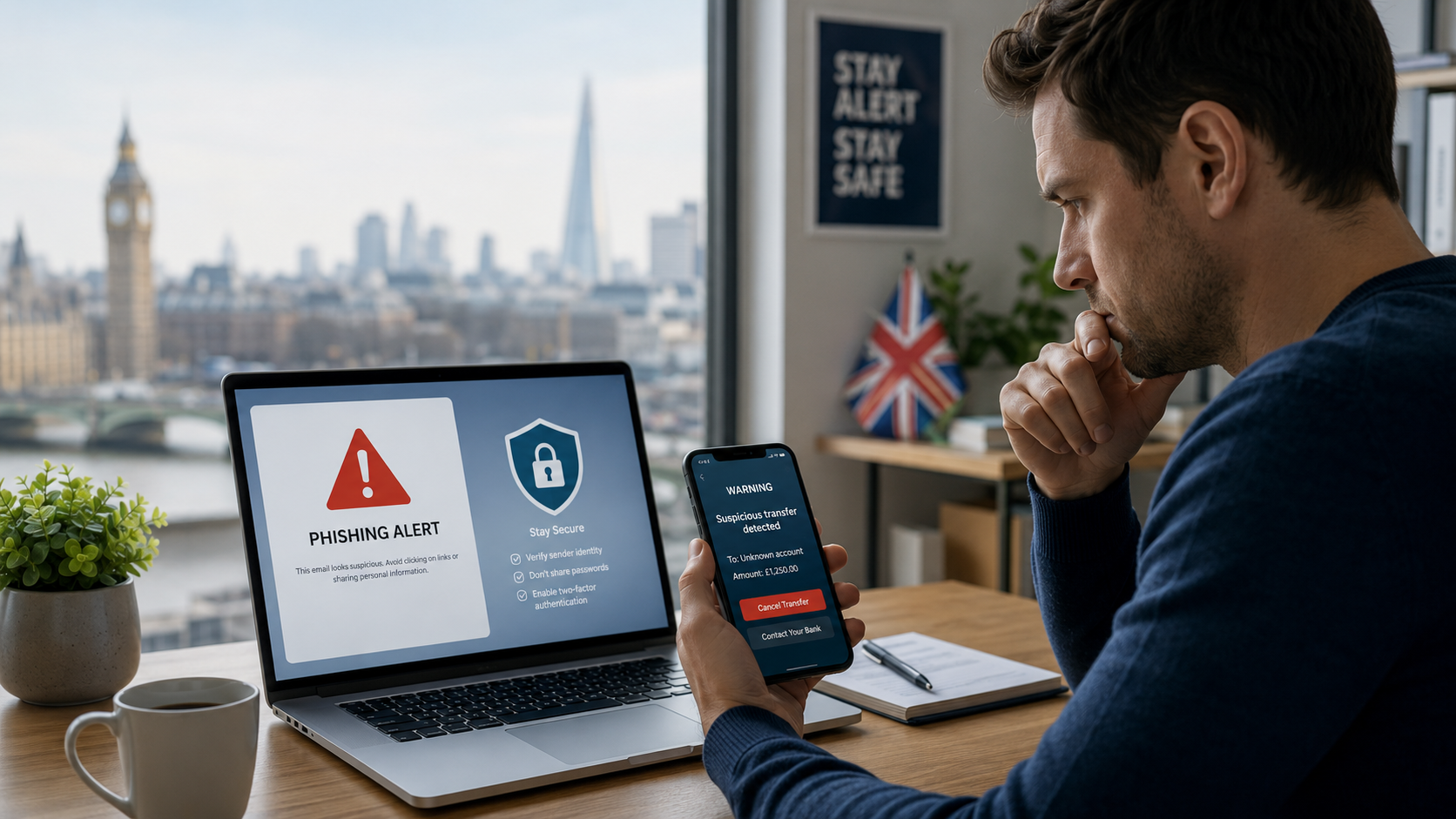

Avoiding online scams UK rules and protections can seem confusing, but the main ideas are simple. Scammers use fake shops, messages, adverts, investments, and calls to steal money or personal details. UK rules offer help, but the safest step is to stop and check before paying.
What Avoiding Online Scams UK Rules and Protections Means
Avoiding online scams means spotting danger before a criminal tricks you. UK protections include consumer law, payment rules, financial regulation, and official reporting systems.
No rule stops every scam, and a refund is not certain. Protection may depend on how you paid, where the money went, and how quickly you reported it.
Know the Main Warning Signs
Scammers often create pressure. They may say your bank account is in danger, a parcel is waiting, or an offer ends today. They may pretend to be a bank, the police, a government office, or a famous company.
Stop when a message makes you feel scared, excited, or rushed. Do not click its link or use its phone number. Find the organisation’s real details yourself. Correct spelling and a neat logo do not prove that a message is genuine. The National Cyber Security Centre says scammers often use authority, urgency, emotion, and scarcity to make people act quickly.
Never share a password, security code, gift-card number, or remote access to your device. A real bank will not ask you to move money to a “safe account.”
Check a Seller Before You Pay
Check the seller’s name, address, contact details, returns policy, and reviews on more than one website. Look closely at the website address because one changed letter can lead to a fake site.
A padlock symbol does not prove that the seller is honest. It only means the connection is encrypted. Compare very low prices with trusted shops. Avoid paying an unknown seller by bank transfer, gift card, cryptocurrency, or money-transfer service. Card payments may offer more help if something goes wrong.
UK Rules Against Misleading Online Trading
The Digital Markets, Competition and Consumers Act 2024 protects consumers from unfair commercial practices. These rules have applied from 6 April 2025. They cover misleading actions, missing important information, aggressive selling, fake reviews, and hidden extra charges called drip pricing.
A genuine business must not lie about a product, hide important costs, or pressure a customer unfairly. A criminal using a fake identity may disappear, so checking first is still important.
Protection When You Pay by Bank Transfer
An authorised push payment scam happens when a criminal tricks you into sending money yourself. For eligible Faster Payments or CHAPS payments to a UK account, rules introduced on 7 October 2024 mean a bank or payment provider should usually reimburse an eligible victim.
The maximum required reimbursement is £85,000 per claim. Firms normally aim to pay within five business days, although some cases can take up to 35 business days. A firm may apply an excess of up to £100, but not to a vulnerable consumer.
These rules do not cover every transfer. Payments sent abroad or through other systems may fall outside them. Contact your bank immediately and complain if you believe its decision is unfair.
Protection When You Pay by Card
Chargeback is a card-scheme process that may help when goods do not arrive or a payment goes wrong. It is not a legal right, but you can ask your card provider to try it.
Section 75 of the Consumer Credit Act 1974 may offer stronger protection when you use a credit card and the item’s cash price is more than £100 and no more than £30,000. The credit provider may share responsibility with the seller for a broken contract or false statement.
Keep receipts, adverts, messages, screenshots, and delivery details to support your claim.
Check Financial Firms with the FCA
Before using an investment, loan, insurance, pension, or another financial service, check the FCA Firm Checker or Financial Services Register. Make sure the firm is authorised for the service you need. Compare its phone number and website with the official record because criminals may copy a real firm’s name.
Using an authorised firm reduces risk and may give access to the Financial Ombudsman Service or Financial Services Compensation Scheme when their rules apply.
What to Do After an Online Scam
Contact your bank or payment provider immediately. Ask it to stop the payment, secure your account, and explain the refund process. Change any password you shared, starting with your email password. Turn on two-step verification.
Forward suspicious emails to report@phishing.gov.uk and scam texts to 7726. Report lost money or hacking to Report Fraud in England, Wales, or Northern Ireland. In Scotland, report it to Police Scotland by calling 101.
Do not pay anyone who promises to recover your money for an upfront fee. It may be another scam.
Five Frequently Asked Questions
1. Does my bank have to refund every online scam?
No. Refund rules depend on the payment method, facts, limits, and exceptions.
2. Is a website safe because it has a padlock?
No. A scammer can also use an encrypted website.
3. Is chargeback a legal right?
No. It is a card-scheme process. Section 75 is a separate legal protection.
4. Should I call the number in a suspicious message?
No. Find the official number yourself.
5. What should I do first after paying a scammer?
Contact your bank or payment provider immediately.
Conclusion
Avoiding online scams UK rules and protections starts with one habit: stop and check. Do not let fear, urgency, or a cheap price push you into paying. Check the seller, use official contact details, choose a safer payment method, and keep evidence.
UK protections include unfair-trading law, bank-transfer reimbursement rules, chargeback, Section 75, FCA checks, and complaint services. Each protection has conditions and limits, so prevention remains important. When something feels wrong, end the contact, speak to the real organisation, contact your bank, secure your accounts, and report the scam. Acting early gives you the best chance of protecting your money and personal information.