
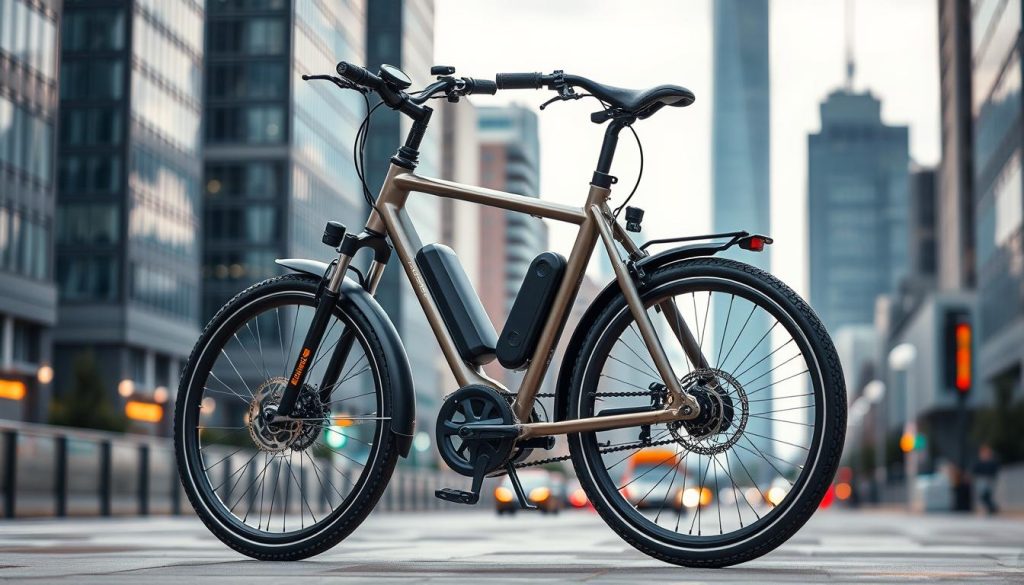

An e-bike simplifies daily travel, whether that means commuting to work, running errands close to home, or taking a quick spin around your neighbourhood. The motor assists with pedalling, especially when going uphill or covering longer distances. However, motor power alone does not determine comfort. The frame, saddle, tyres, battery, and braking system also influence the overall riding experience. Choosing the right electric bicycle means looking beyond specifications and considering the features that make everyday journeys easier.
It is always good to look for features that are actually going to be used before selecting a model. A bike for daily commute needs to be comfortable, responsive and adapted to the roads / distances you ride most often.
Choose A Frame That Fits Properly
The frame defines your position on and whose way the entry and exit from the bicycle is easier. Not too large or handlebars far promote it become boring, mainly in common routes.
Step-through frames form a functional choice for riders who prefer not to swing their leg over a high top tube when mounting or dismounting. The typical frame will also do for most riding, just as long as the size and position on that bike are suitable.
Another detail to check is handlebar height. The big handlebars normally aid a more relaxed posture, which suits many people more nicely every day as well as for shorter journeys. Nonetheless, a bit more aggressive stance should benefit the sportier types of riders out there.
It should be stable when going through turns and travelling over uneven terrain. Consult the sizing suggestions of the maker or take a test ride before buying. A finely specced bicycle won’t feel good without a proper fit.
Select A Saddle That Supports You Right
It is an uncomfortable journey when a saddle does not fit. Since riders will be spending the majority of their time sitting on the bicycle, it is important to pay special attention to the seat.
Comfort is affected by saddle shape width, and also padding. Some riders like their saddles wide; some prefer it narrow. Also, ultra-soft padding is not always a better option since it must have to support the body than just feeling soft when pressed with the hand.
More than the actual saddle design, appropriate adjustment matters as well. It can be tiring to pedal if the seat is too low. If it is higher, then unlikely to reach the pedals. This would mean that the saddle should support an even more natural, lower leg extension without stretching the legs out to an awkward pedalling farm.
Suspension: A bit of abstraction works well here too, especially on rough roads. The front suspension will take the brunt of hits from chiselled roads and a suspension seatpost also breaks up vibrations that can reach your rear. But for predominately smooth city roads, an appropriate-fitting saddle and well-chosen tyres might just strike the ideal balance between comfort versus mass/maintenance.
Make Sure The Battery Range Suits Your Routine
When buying the electric bicycle, battery capacity is a significant parameter. There is nobody that wants to run out of help on the midway factor of an everyday excursion due to the fact that the battery became smaller than marketed.
Capacity is in watt-hours (Wh). Higher specs usually means more energy for the motor, but it doesn’t equal a distance. Real range may vary depending on assistance level, terrain and hilliness of route, wind conditions and the rider and payload weight.
For instance, if you are traveling flat roads with low assistance levels, you probably will use a battery less than someone going up-hill or stopping and quickly accelerating all the time.
Look beyond the maximum range specified in a brochure and consider how far your normal travels tend to be daily. They can also make the bicycle more practical by allowing a little room for unexpected trips or in case of changing conditions.
Charging an arrangement can be something to really look for as well. Certain electric bike models, on the other hand, possess removable batteries which can be helpful if charging your battery indoors. If you want reliable performance, follow the instructions provided by manufacturers to charge, store and care for your battery.
Choose Motor Assistance That Feels Natural
Motor: While the motor is one of the most appreciated features that attract people to an electric bicycle, this makes it easier to pedal when starting from a stop or going up a hill.
Electric Bicycles Generally Feature Multiple Levels Of Assistance Higher settings add more assistance which also makes it easier when the going gets tough, while lower settings are ideal for conserving battery life. The ability to move up and down between these levels makes modifying the ride to fit different situations that much more intuitive.
This also depends on the type of sensor or types of sensors that you have. Cadence sensor picks pedal movement, torque sensor shows what force rider applies. Torque sensors do, however, position assistance closer to the rider’s effort level; but that only represents part of the whole system.
Smooth acceleration is particularly useful in busy areas where riders regularly stop and start. Before purchasing an electric bicycle, check its motor specifications, assisted speed limits, and compliance with local regulations.
Pick Tyres That Suit Your Regular Routes
The selection of tyres is an important consideration for the way an electric bicycle rides over various road surfaces. They affect grip, rolling resistance, stability and how much of the vibration gets through to the rider.
For a lot of city riding, tyres built for the tarmac generally are an intelligent solution. It provides sufficient grip without creating unnecessary rolling resistance. On the other hand, if your usual route includes gravel, broken pavement or other rougher terrain, a mixed-surface tire may be more appropriate.
Yes, wider tyres (when spun up to the right pressure) give you more protection. As a basic rule of thumb however, tyre width should be dictated by the bicycle’s frame and intended use, not appearance.
Pressure is equally important. Soft tyres create more rolling resistance (meaning you’re pedalling harder to move at the same speed), and means that there’s a greater risk of damaging the rim, while too high pressure could produce a much firmer ride on bumpy roads. Looking at the tyre itself, you will find a recommended pressure range, which is generally based on manufacturer advice and your intended riding method.
If you need to commute, it is also comfortable to have puncture-resistant tyres. While no tyre is ever perfectly puncture-proof, they can lower the risk of flats causing delays.
Reliable Brakes and Lights Improve Confidence
Another attribute of a comfortable bicycle is that it needs to be easy ridden. Brakes that facilitate appropriate slowing and stopping of the motorcycle when traffic dictates.
Electric bicycle rim brakes or disc brakes are commonly used. This makes disc brakes a consistent performer, given that the hydraulic disc systems need less hand effort than many mechanical alternatives. Each choice must be influenced by the design of the bicycle, riding conditions and maintenance requirements.
Lights are an important element, especially for individuals traveling early in the morning or past dusk. A front light was used to light the way ahead, while a red rear light made the bike more visible to fellow road users. Reflectors provide additional visibility.
Additional helpful features are a bright display, conveniently-located helper controls and a bell. Riders can easily check the bike without being distracted by an overcomplicated display showing battery status and assistance level.
Daily inspect the brakes, all lights and electrical systems. These basic checks could help to point out issues earlier than they become an issue for a journey.
Practical Accessories Make Everyday Travel Easier
When an electric bicycle is integrated into your lifestyle it also operates as a practical vehicle, and some small design elements can become much more significant.
The rear rack or pannier bags provide space for groceries, books or work. On longer journeys, carrying heavy items on the bicycle rather than a heavy backpack.
The mudguards serve the dual purpose of keeping you clean and dry, while a durable kickstand helps with easy parking for quick stops. Use of a chain guard may help keep clothing and the chain from contacting each other.
Another thing to take into consideration is weight. Since they are fitted with a motor and battery, electric bicycles tend to be much heavier than traditional ones. If you want to carry the bike upstairs or load it into a car, look at its overall weight before making a purchase.
Therefore, folding models come in handy if your maximum space is limited. However it is their folded size and weight that differ so ensure the bicycle is suitable for your available space.See Common Cycle Space Examples to find out how easy your bike will be to change.
Final Thoughts
The ideal in class electric bicycle for everyday use is one which fits your schedule instead of just delivering the maximum specifications. But bike design in particular is the key to a normal commute becoming charmingly routine; A well-fitting frame, supportive saddle, decent battery range, and responsive motor with reliable brakes can go a long way.
Consider your riding environment, average distance, whether or not you need to carry bags or stow the bike away in a cramped space. These practical details could filter down your choices for you.
Always test ride if possible before buying but also watch for how the riding position, acceleration, braking and handling on rougher surfaces. With some care, you can discover an electric bicycle that rides as easy and reliable for everyday riding as its gas counterpart.