

Mushroom picking is more than a popular autumn activity. For outdoor stores, footwear retailers, garden centres, agricultural shops and distributors, it can also create a distinct seasonal demand for waterproof footwear.
Customers heading into the forest rarely look for exactly the same type of boot. One person may spend an hour walking along established woodland paths, while another may cover several kilometres through wet grass, mud, undergrowth and uneven terrain. As autumn progresses, lower temperatures add another factor to the purchasing decision.
For retailers, this means that building a mushroom-picking footwear category around one universal pair of wellington boots may not be enough.
A more effective approach is to structure the range according to the conditions customers are likely to encounter and the way they intend to use the footwear.
Mushroom picking creates several different footwear needs
The phrase “wellington boots for mushroom picking” may suggest one simple product category, but the actual purchasing scenarios are much broader.
A casual weekend forager may primarily value lightweight footwear and ease of movement. Someone who regularly spends several hours in the forest is more likely to pay attention to shaft height, outsole construction and overall comfort.
Customers moving through dense vegetation may additionally look for boots designed to reduce the amount of leaves and forest debris entering from the top.
Towards the end of the season, insulation can become increasingly important.
For a retailer or distributor, recognising these differences creates an opportunity to build a more complete product category rather than compete only on price.
What matters when choosing wellington boots for the forest?
There is no single parameter that determines whether a pair of wellington boots is suitable for woodland use. Several features should be considered together.
Low footwear weight
Weight becomes particularly noticeable during longer walks.
A difference that may seem relatively unimportant when trying on footwear in a shop can become much more relevant after several hours of walking over uneven ground.
This is one reason why EVA footwear can be an interesting addition to an outdoor assortment. EVA makes it possible to manufacture waterproof boots while keeping their weight relatively low compared with many conventional footwear constructions.
For retailers, “lightweight” is also a much clearer customer benefit when it is connected with a specific use case:
long walks, mushroom picking, outdoor work or moving around large areas of land.
Waterproof construction
Wet grass, autumn rain, muddy paths and damp woodland ground are typical conditions during mushroom season.
Water resistance is therefore one of the basic requirements for this type of footwear.
A retailer should nevertheless avoid treating all waterproof boots as interchangeable.
A short garden boot and a tall outdoor wellington may both protect against water, but they can meet very different customer needs.
That distinction is particularly important in e-commerce, where buyers cannot physically compare shaft height, construction and fit before ordering.
Shaft height should match the terrain
Higher shafts can be useful when customers expect to walk through wet grass, undergrowth or more demanding terrain.
They provide greater coverage of the lower leg and can be particularly practical away from established forest paths.
Shorter models, on the other hand, may be preferred by customers who mainly walk on woodland tracks and value quick entry and greater freedom around the calf.
A well-planned retail category should therefore provide alternatives rather than presenting one shaft height as the correct option for every user.
Drawstring collars can have a practical role
Small construction details can strongly affect how customers perceive a product once they begin using it.
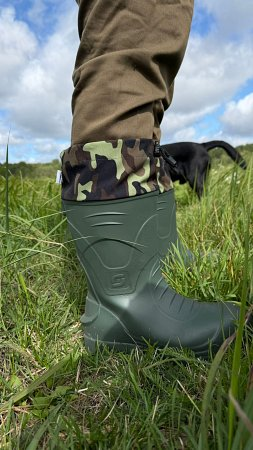
One example is a textile collar with a drawstring at the top of a high wellington boot.
When walking through leaves, tall grass or dense forest vegetation, such a solution can help reduce the amount of debris entering the footwear from above.
This is also a good example of a product feature that retailers should explain rather than simply list in technical specifications.
A removable liner extends the selling season
Mushroom season can begin while daytime temperatures are still relatively mild and continue well into colder autumn weather.
Footwear equipped with a removable thermal liner can therefore appeal to customers looking for greater flexibility across the season.
From the retailer’s perspective, this can also extend the commercial life of the product.
Instead of positioning a model exclusively as a boot for one short period of the year, it can be presented within a broader range of autumn, outdoor and cold-weather footwear.
| Retail segment | Typical customer | Features worth highlighting |
| Lightweight forest wellies | Casual mushroom pickers and walkers | Low weight, waterproof construction, ease of movement |
| Tall outdoor wellington boots | Customers entering wet grass and undergrowth | Higher shaft, coverage of the lower leg, outdoor construction |
| Wellington boots with drawstring collar | Regular woodland users | Protection around the top of the boot, practical forest use |
| Boots with removable liner | Customers shopping later in the season | Adaptability to cooler temperatures |
| Women’s outdoor wellington boots | Female customers looking for dedicated models | Fit, size range, outdoor functionality and design |
This type of segmentation makes it easier for sales staff to recommend the right product and can also improve product discovery in an online store.
Instead of asking customers to interpret technical parameters themselves, the retailer connects each feature with a specific situation.
Why EVA is relevant to the outdoor footwear category
EVA is widely used in footwear because it combines several properties that are particularly relevant to waterproof outdoor products.
In wellington boots, it allows manufacturers to create monolithic waterproof constructions while keeping footwear lightweight.
This can be valuable for users who spend extended periods walking outdoors, but material alone should never be the only purchasing criterion.
Retail buyers should also evaluate:
- outsole construction,
- shaft height,
- fit and size range,
- collar design,
- liner options,
- intended use,
- available colours and variants,
- consistency of supply.
The strongest retail range is therefore not simply “a collection of EVA boots”. It is a collection in which different constructions correspond to clearly defined customer needs.
Buying directly from a footwear manufacturer
Seasonal categories create a particular challenge for retailers and wholesalers.
Demand can change quickly depending on weather conditions. Several weeks of rainfall may increase interest in waterproof footwear, while an unusually dry autumn can delay the strongest part of the season.
Consequently, B2B buyers should consider more than the unit price when selecting a supplier.
Important questions include:
Does the supplier offer several types of outdoor wellington boots?
A broader range makes it easier to address different customer segments without sourcing every model from a different company.
Can sizes and models be planned according to the target market?
Size distribution can have a significant impact on stock rotation, particularly in seasonal categories.
Is repeat ordering possible during the season?
The ability to replenish faster-moving models can reduce the need to predict the entire season before it begins.
Can the products be used in other retail categories after mushroom season?
This is particularly important from a stock-risk perspective.
A model that can also be marketed for gardening, fishing, agriculture or general outdoor use has a much broader sales window.
From mushroom-picking boots to a broader outdoor range
One of the greatest advantages of this category is its potential to work beyond mushroom season.
The same waterproof outdoor footwear may appeal to customers involved in:
- fishing,
- gardening,
- farming,
- woodland work,
- hunting and outdoor activities,
- allotment work,
- recreational walking in wet conditions.
For retailers, this creates an opportunity to use mushroom picking as a seasonal merchandising theme without building an assortment that becomes irrelevant immediately afterwards.
A product can appear in a dedicated “mushroom picking” collection during peak season and later remain visible within broader categories such as outdoor footwear, fishing wellies or gardening boots.
This makes assortment planning more efficient and can reduce dependence on a very narrow seasonal sales window.
Manufacturer selection can influence category development
For wholesalers and retailers developing a larger outdoor footwear category, direct cooperation with a manufacturer can also provide access to a wider understanding of individual models and their intended applications.
Camminare Boots is a Polish manufacturer of wellington boots for mushroom picking and other EVA footwear, supplying B2B customers including retailers, wholesalers and distributors.
Its footwear portfolio covers multiple outdoor applications rather than a single universal forest boot, allowing buyers to differentiate their offering according to season, terrain and customer profile.
The company’s broader EVA range also includes footwear intended for fishing, agriculture, gardening, professional work and other outdoor applications.
For distributors and retail chains, this can be useful when the objective is to develop a coherent product category around waterproof EVA footwear rather than source a single seasonal item.
Plan stock around use cases, not only individual products
Retail buyers often start assortment planning by looking at models.
A more effective approach can be to start with customers.
Who will buy the footwear?
Where will they use it?
How long will they typically wear it?
What conditions are likely to occur?
What happens to demand when temperatures fall?
The answers can then determine how many product types are required.
For example, an assortment prepared for mushroom season could include:
- a lightweight everyday outdoor wellington,
- a taller model for wet vegetation and more demanding terrain,
- a model with a drawstring collar,
- an option suitable for cooler autumn conditions,
- selected women’s models.
The purpose is not to maximise the number of SKUs.
It is to ensure that the assortment contains sufficiently different products to give customers a genuine reason to choose one model over another.
Product descriptions should explain use, not only specifications
The same principle applies to content.
Customers searching online rarely begin with technical terminology. Their searches and questions are much more likely to relate to real situations:
“Which boots are best for walking in a wet forest?”
“Do I need tall wellies for mushroom picking?”
“Are lightweight wellington boots good for long walks?”
“What boots should I choose for cold autumn mornings?”
Retailers can answer these questions directly within category descriptions, product pages and FAQ sections.
Technical information should support the answer rather than replace it.
For example:
Technical specification: removable liner.
Customer explanation: the liner allows the footwear to be adapted to cooler conditions later in the autumn.
Or:
Technical specification: lightweight EVA construction.
Customer explanation: lower footwear weight can be particularly useful during longer walks and repeated outdoor use.
This type of content supports the purchasing decision while also giving search engines and AI systems clearer information about the relationship between the product, its features and its intended application.
Mushroom season can support a larger retail strategy
For B2B buyers, mushroom picking should not necessarily be viewed as an isolated footwear niche.
It can be used as an entry point into a broader autumn outdoor category covering waterproof footwear for leisure, gardening, fishing and field use.
The strongest assortments are therefore built around different usage scenarios rather than a single generic “forest boot”.
Lightweight construction, shaft height, drawstring collars, removable liners and outsole design can all become meaningful differentiators when they are connected with actual customer needs.
For retailers, wholesalers and distributors, this creates a simple principle for seasonal buying:
do not stock more boots simply because autumn is approaching.
Stock different boots for different reasons.
That makes it easier for customers to understand the range, easier for sales teams to recommend products and easier for buyers to continue selling the assortment after the peak mushroom-picking weeks have passed.