
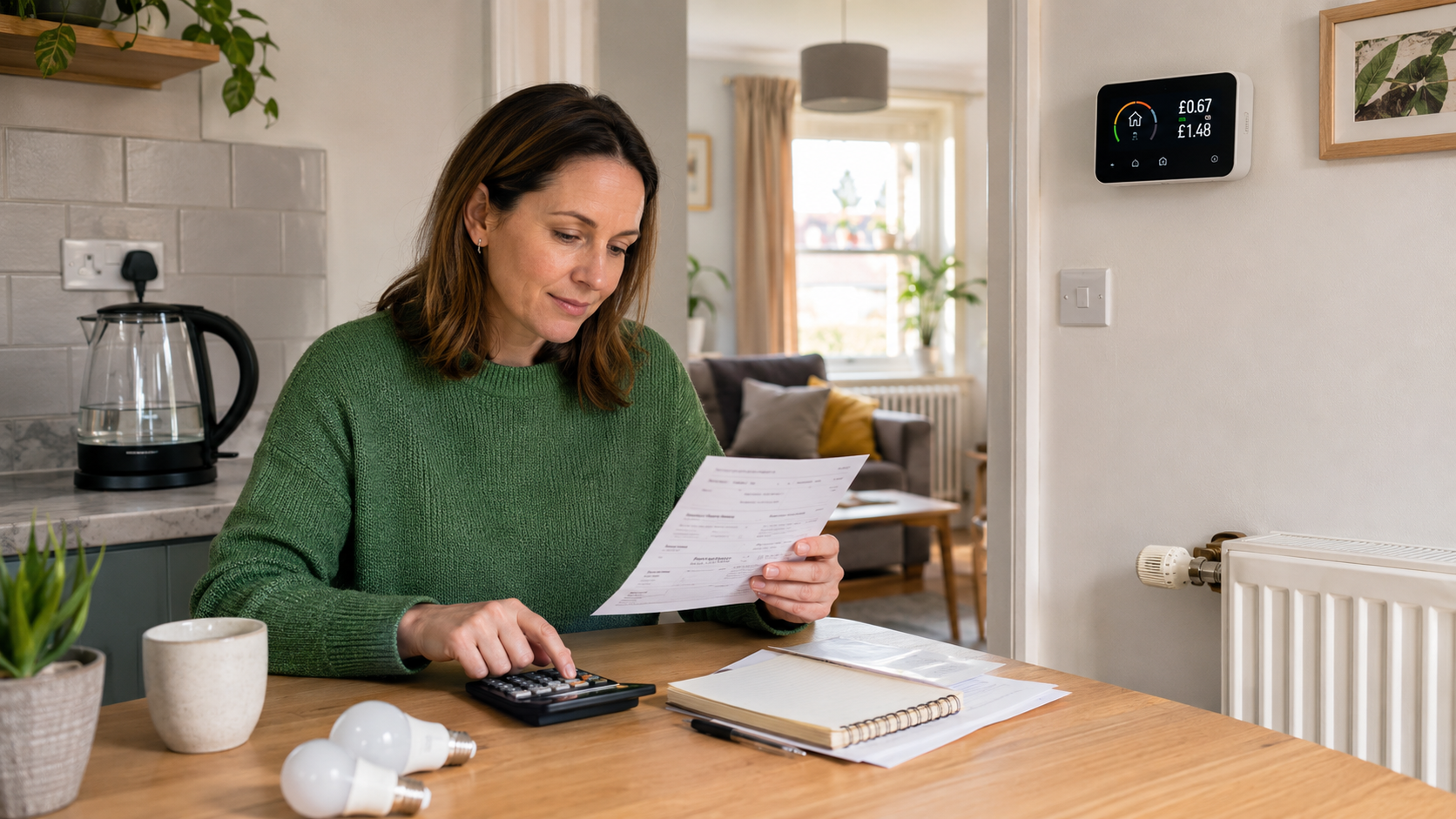

Energy bills can take a large part of a household budget. The good news is that small changes can help you use less gas and electricity without making daily life difficult.
This Improve saving money on energy bills UK tips for beginners guide explains what you can do at home. The tips are simple, practical and suitable for people who have never tried to reduce their energy use before.
You do not need to make every change at once. Start with one or two easy actions. When they become normal habits, add another tip. Small savings can grow when you repeat them every day.
Understand What You Pay For
Your energy bill normally includes a unit rate and a standing charge. The unit rate is the price you pay for each unit of gas or electricity you use. The standing charge is a daily fee that you usually pay even when you use no energy.
Using less energy can reduce the unit-rate part of your bill, but it will not normally remove the standing charge. Your total bill can still rise when you use more energy because the energy price cap does not place a limit on your total spending.
Check your bill to find your unit rates, standing charges and meter readings. Make sure the readings are not incorrect or based on an old estimate.
Control Your Heating Carefully
Heating controls can make a big difference because they decide when and where your home is heated.
Set your heating to come on only when someone needs it. Turn radiators down in rooms that are empty, but do not make your home so cold that it becomes uncomfortable or unsafe.
You can also lower your thermostat slightly when it is safe for everyone in your household. A small change may help you use less energy without making the home feel much colder.
People with a combi boiler may also be able to reduce the boiler’s flow temperature. This is the temperature of the water sent to the radiators. Lowering it can make the boiler cheaper to run, but you should follow the boiler instructions or ask a qualified professional when you are unsure.
Keep Warm Air Inside Your Home
Warm air can escape through gaps around windows, doors and floors. When this happens, your heating must work harder.
Close curtains when it becomes dark, but do not let them cover a working radiator. Use draught excluders around suitable doors and seal safe gaps around windows. Never cover air vents because they are needed for ventilation.
Window film may help reduce heat loss through single-glazed windows. A hot water cylinder jacket can also keep stored water warm for longer.
Ofgem recommends draught-proofing suitable gaps while keeping ventilation channels clear. It also advises insulating hot water tanks to reduce wasted heat.
Use Less Hot Water
Heating water uses energy, so using less hot water can lower your gas or electricity use.
Take a shower instead of filling a bath when possible. Spending less time in the shower can also help. Turn the tap off while brushing your teeth, and do not leave hot water running when it is not needed.
Fix dripping hot taps because they waste both water and the energy used to heat it. When washing dishes by hand, fill a bowl instead of keeping the hot tap running.
These steps should still allow everyone to wash properly while reducing unnecessary energy use.
Save Energy When Washing Clothes
Wash clothes only when you have enough for a full load, but do not pack the machine too tightly. Many clothes can be washed at 30°C unless their care label or hygiene needs require a higher temperature.
Choose an economy programme for normal washing. A quick wash may be suitable for clothes that are not very dirty.
Dry clothes outside when the weather allows. A drying rack can also reduce tumble-dryer use, but rooms should be ventilated to help prevent too much moisture from building up.
Ofgem recommends washing at 30°C, filling the machine and using shorter cycles when suitable. The Energy Saving Trust also advises using fewer, colder washes and avoiding the tumble dryer where practical.
Use Kitchen Appliances Wisely
Only boil the amount of water you need in the kettle. More water takes longer to heat and uses more electricity.
Keep the oven door closed while food is cooking. Opening it lets heat escape. When practical, cook more than one item at the same time and safely store extra portions for another meal.
Wait until the dishwasher is full before running it. Use its economy setting when suitable. Economy programmes may take longer, but they are designed to use energy and water efficiently.
Citizens Advice recommends boiling only the water needed, using full washing loads and keeping the oven door closed as much as possible.
Switch Off Lights and Standby Power
Turn lights off when you leave a room. Replace old bulbs with energy-efficient LED bulbs when they stop working or when changing them is affordable.
Some televisions, game systems, computers and kitchen devices still use electricity in standby mode. Switch them off at the plug when it is safe. Check the instructions first because fridges, freezers and some recording devices may need to stay on.
A switchable extension lead can make it easier to turn several safe devices off together.
Track Your Energy Use
A smart meter can send readings to your supplier automatically. Its in-home display can show how much energy you are using.
A smart meter does not save money by itself. It becomes useful when you watch the display and change wasteful habits. For example, you may notice a sudden rise when an electric heater, tumble dryer or other powerful appliance is switched on.
Households without a working smart meter should send regular meter readings so bills are based on actual use instead of estimates.
Check Your Energy Tariff
Read your bill to check whether you have a single-rate or time-of-use tariff.
On a single-rate tariff, electricity normally costs the same throughout the day. On a time-of-use tariff, electricity may be cheaper during certain off-peak hours.
Use appliances during cheaper hours only when your tariff offers this benefit. Do not run washing machines, tumble dryers or dishwashers while everyone is asleep because of the possible fire risk.
Compare the full cost of tariffs, including the unit rate and standing charge, rather than looking at only one price.
Consider Simple Home Improvements
Insulation can help a home stay warm for longer. Loft insulation, wall insulation, draught-proofing and better windows may reduce the amount of heating needed.
These improvements can cost money, so check whether financial help is available before paying. Government schemes may support eligible households with insulation, heating systems or other energy-saving work. Available help can depend on your income, property, area and circumstances.
Tenants should speak to their landlord before making permanent changes.
What Is the Easiest Energy-Saving Tip for a Beginner?
Start by turning off unused lights and safe appliances. These actions cost nothing and are easy to remember. You can then try washing clothes at a lower temperature, boiling less water and controlling your heating more carefully.
Does Turning Appliances Off at the Plug Save Money?
It can save money because some appliances continue using electricity in standby mode. However, do not switch off fridges, freezers, medical equipment or devices that must remain powered. Check the instructions when you are unsure.
Will a Smart Meter Automatically Lower My Bill?
No. A smart meter records and displays energy use, but it does not reduce use automatically. You must use the information to change your habits, such as switching off unnecessary devices or adjusting your heating.
Is It Cheaper to Use Appliances at Night?
Only when you have a tariff with cheaper off-peak hours. Many households pay the same electricity rate all day. Check your bill or ask your supplier before changing when you use appliances.
Can Renters Reduce Their Energy Bills?
Yes. Renters can close curtains, manage heating controls, use appliances carefully, wash clothes efficiently and reduce hot water use. They should ask the landlord before adding insulation or making permanent changes.
Conclusion
The best Improve saving money on energy bills UK tips for beginners plan is to begin with simple habits. Control your heating, stop safe draughts, use less hot water, fill washing machines and dishwashers, boil only the water you need and switch off unused lights.
Check your meter and bill regularly so you understand how much energy you use. A smart meter can make this easier, but your actions create the savings.
After making free changes, look at draught-proofing, insulation and heating improvements. Check for government or supplier support before spending money.
You do not need to change everything in one day. Choose one action, repeat it and then add another. A group of small, careful changes can help you waste less energy and manage your household bills more effectively.
Read more Beginner Guide to UK Reality TV Shows