
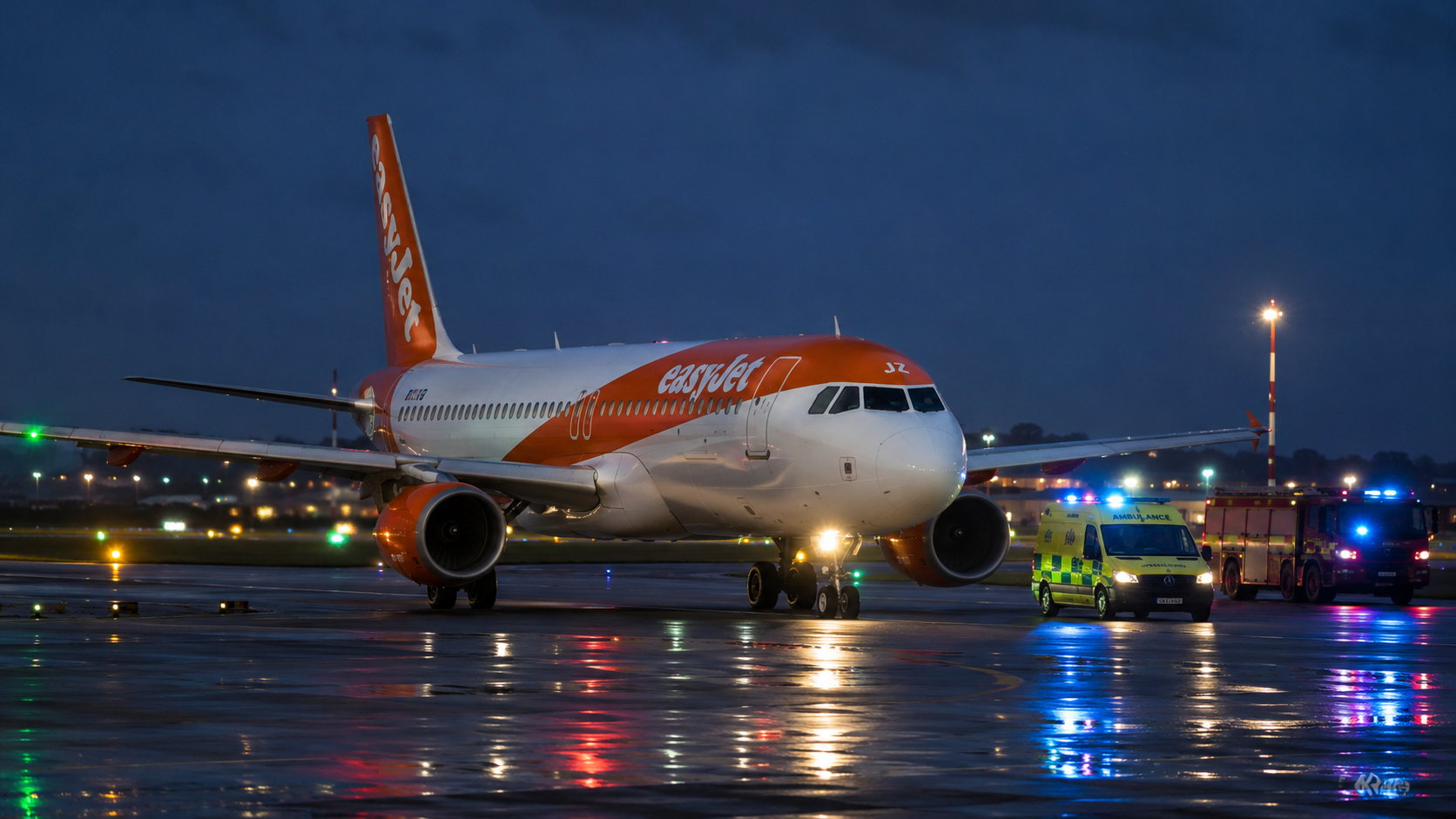

The phrase easyJet flight U2238 emergency landing Newcastle has been widely used by people searching for information about an easyJet plane that made an urgent diversion to Newcastle Airport. The incident happened on the evening of October 27, 2025. The aircraft was flying from Copenhagen, Denmark, to Manchester, England, when a passenger needed urgent medical attention. The pilots changed the flight plan and landed safely at Newcastle so medical workers could help the passenger.
There is one important detail about the flight number. News reports and aviation records identify the flight as U22238, while its operational call sign was EZY2238. Many online searches shorten the number to U2238. In this article, the requested keyword is used, but the correct reported flight number is explained so readers are not misled.
Read also: LCWRA First Payment After Decision Explained
What Happened on the EasyJet Flight?
The easyJet service left Copenhagen Airport on Monday, October 27, 2025. Its planned destination was Manchester Airport. At first, the journey followed its normal route toward the United Kingdom. The aircraft crossed the North Sea and moved closer to the east coast of England.
During the flight, a passenger developed a medical problem that needed quick attention. EasyJet later said that a customer on board required urgent medical care. The airline did not share the person’s name, age, illness, or private medical details. This means it would be wrong to guess what happened to the passenger. The confirmed fact is that the condition was serious enough for the crew to divert the plane.
The flight crew declared an emergency and turned toward Newcastle Airport. Aviation tracking reports said the pilots used the emergency transponder code 7700. This code tells air traffic controllers that an aircraft has an urgent situation and may need special help or priority. The plane then made a direct diversion to Newcastle rather than continuing straight to Manchester.
Why the Plane Diverted to Newcastle
The main reason for the easyJet flight U2238 emergency landing Newcastle was the passenger’s need for urgent medical support. Continuing to Manchester would have kept the passenger in the air for longer. By landing at Newcastle, the crew could place the passenger in the care of medical professionals sooner.
A diversion is a change from the original flight plan. It does not always mean that the aircraft itself is damaged. In this case, reports did not identify a technical fault with the plane. The emergency was linked to a passenger welfare issue.
This is an important difference because some headlines may make readers think the aircraft was in danger of crashing. The available reports show that the pilots made a controlled and safe landing so a passenger could receive help.
Newcastle was a practical place to land because the aircraft was approaching the east coast of England from the North Sea. The crew turned toward the airport after declaring the emergency. The decision allowed medical services to meet the aircraft after it landed.
The Emergency Landing at Newcastle Airport
The aircraft landed safely at Newcastle Airport late on October 27. Different reports give slightly different minute-by-minute landing times, but they agree that the plane arrived shortly before 11 p.m. UK time.
The small timing difference may come from the way flight trackers record touchdown, runway movement, or arrival at the parking area. The important confirmed point is that the landing was completed safely.
Medical personnel were waiting for the flight. After the plane reached the ground, the passenger was handed over to medical services. EasyJet confirmed that the customer was met by medical workers on arrival.
The airline did not release more information about the person’s condition. A careful report should therefore not claim that the passenger had a certain illness or give an outcome that was never confirmed.
The landing was described in many headlines as an emergency landing. In simple words, it was an urgent, unscheduled landing caused by a medical situation on board. The plane was able to land normally, and there were no reports of injuries caused by the landing itself.
What the Pilots and Crew Did
The pilots had to make an important decision quickly. They needed to think about the passenger’s condition, the plane’s position, the nearby airports, and the time needed to reach medical help.
They declared the emergency, worked with air traffic control, changed course, and brought the aircraft safely into Newcastle.
The cabin crew cared for the people inside the cabin while the flight was diverted. EasyJet said that safety and wellbeing were its highest priority. The airline did not release full details of the care given in the air, so those actions should not be guessed.
The response shows why crews may land at another airport during a health emergency. Even when a plane works normally, reaching medical help quickly can matter.
What Happened After the Passenger Received Help?
After the passenger was met by medical services, the aircraft remained at Newcastle for a short time. Reports said the plane was refuelled before continuing its journey.
Aviation tracking information shows that the flight later departed Newcastle and completed the remaining trip to Manchester.
Aviation reports said the aircraft arrived in Manchester after midnight on October 28. Once the urgent medical situation had been handled and the aircraft was ready, the passengers and crew continued to the planned destination.
EasyJet apologised for the diversion and described the event as being outside the airline’s control. That description makes sense because a sudden passenger illness cannot normally be planned or prevented by the airline. The company’s response explained that the change was caused by a passenger welfare issue.
Was the Aircraft in Technical Danger?
Based on the confirmed reports, there is no evidence that the aircraft suffered an engine problem, fire, loss of control, or another mechanical failure.
The emergency declaration was connected to a passenger medical issue. The aircraft landed safely, stayed at Newcastle for a limited period, and then flew onward to Manchester.
The words “emergency landing” can sound frightening and may make people think the plane was broken. However, a serious passenger illness can also lead pilots to declare an emergency. This can give the aircraft priority and helps airport teams prepare.
In this incident, the urgent concern was the passenger, not a reported aircraft failure.
Correcting Confusion About U2238 and U22238
Many readers search for easyJet flight U2238 emergency landing Newcastle, but the flight involved was reported as easyJet U22238. Aviation sources also displayed the operational form EZY2238.
The similar numbers can easily cause confusion, especially when headlines, tracking sites, and search terms use different formats.
The clearest way to identify the incident is by its route and date. It was the easyJet flight travelling from Copenhagen to Manchester on October 27, 2025, which diverted to Newcastle because a passenger needed urgent medical attention.
This description separates the event from other easyJet flights that may have similar numbers.
Using the accurate number is important because U2238 can also appear as a separate scheduled flight number in flight databases. A responsible article should therefore include the popular search keyword while also telling readers that U22238 and EZY2238 are the forms connected to this medical diversion.
Confirmed Facts About the Incident
The main facts are clear. The flight was operated by easyJet. It travelled from Copenhagen and was heading to Manchester. The event happened on October 27, 2025.
A passenger required urgent medical attention. The pilots declared an emergency and diverted to Newcastle Airport. Medical services met the passenger after landing. The aircraft later continued to Manchester.
Some details were not made public. EasyJet did not disclose the passenger’s medical condition or identity. There is also no confirmed public report explaining the passenger’s later health outcome.
Leaving out guesses keeps the article fair, respectful, and accurate.
Conclusion
The easyJet flight U2238 emergency landing Newcastle incident was a medical diversion, not a reported aircraft failure.
On October 27, 2025, an easyJet flight from Copenhagen to Manchester changed course because a passenger needed urgent medical care. The pilots declared an emergency and landed safely at Newcastle Airport, where medical workers were ready to assist.
After the passenger was handed over to medical services, the aircraft was prepared for departure and later continued to Manchester.
The most important accuracy point is the flight number. Although many people use the phrase easyJet flight U2238 emergency landing Newcastle, reliable reports identify the service as U22238 and show its operational call sign as EZY2238. The popular keyword likely came from shortening or misreading those numbers.
The event shows a calm and organised response to an urgent health problem in the air. The pilots changed the route, air traffic controllers supported the diversion, Newcastle Airport received the plane, and medical workers took charge of the passenger.
The aircraft landed without a reported technical problem and later completed its trip.
No reliable public source gives the passenger’s exact illness or final medical condition. For that reason, those details should remain private and should not be guessed.
The correct and complete summary is simple: a passenger needed urgent help, the easyJet crew diverted the Copenhagen-to-Manchester flight to Newcastle, the aircraft landed safely, medical services responded, and the flight later continued to Manchester.
Read More: Universal Credit £325 Payment: Eligibility and Latest Update