
Searching for the best humita en chala near me usually means you are craving something warm, creamy, comforting, and unmistakably South American.
Humita en chala is a traditional corn-based dish strongly associated with northern Argentine cuisine. Fresh corn is grated or ground and typically combined with ingredients such as onion, squash, cheese, herbs, and spices. The mixture is wrapped inside corn husks—known as chala—and cooked until soft and fragrant. Argentina’s official tourism site describes the finished dish as having a creamy texture with a naturally sweet-and-savory corn flavor.
But finding a genuinely good humita can be harder than finding empanadas or other better-known Latin American dishes.
This guide explains what to look for, how to find authentic humita nearby, what makes one version better than another, and what you should order when you discover a restaurant that serves it.
What Is Humita en Chala?
Humita en chala is made with corn as its central ingredient.
Traditional preparation starts with fresh corn kernels that are grated or ground into a thick mixture. Depending on the regional or family recipe, cooks may add onion, squash, tomato, basil, peppers, cheese, chilli, or other seasonings.
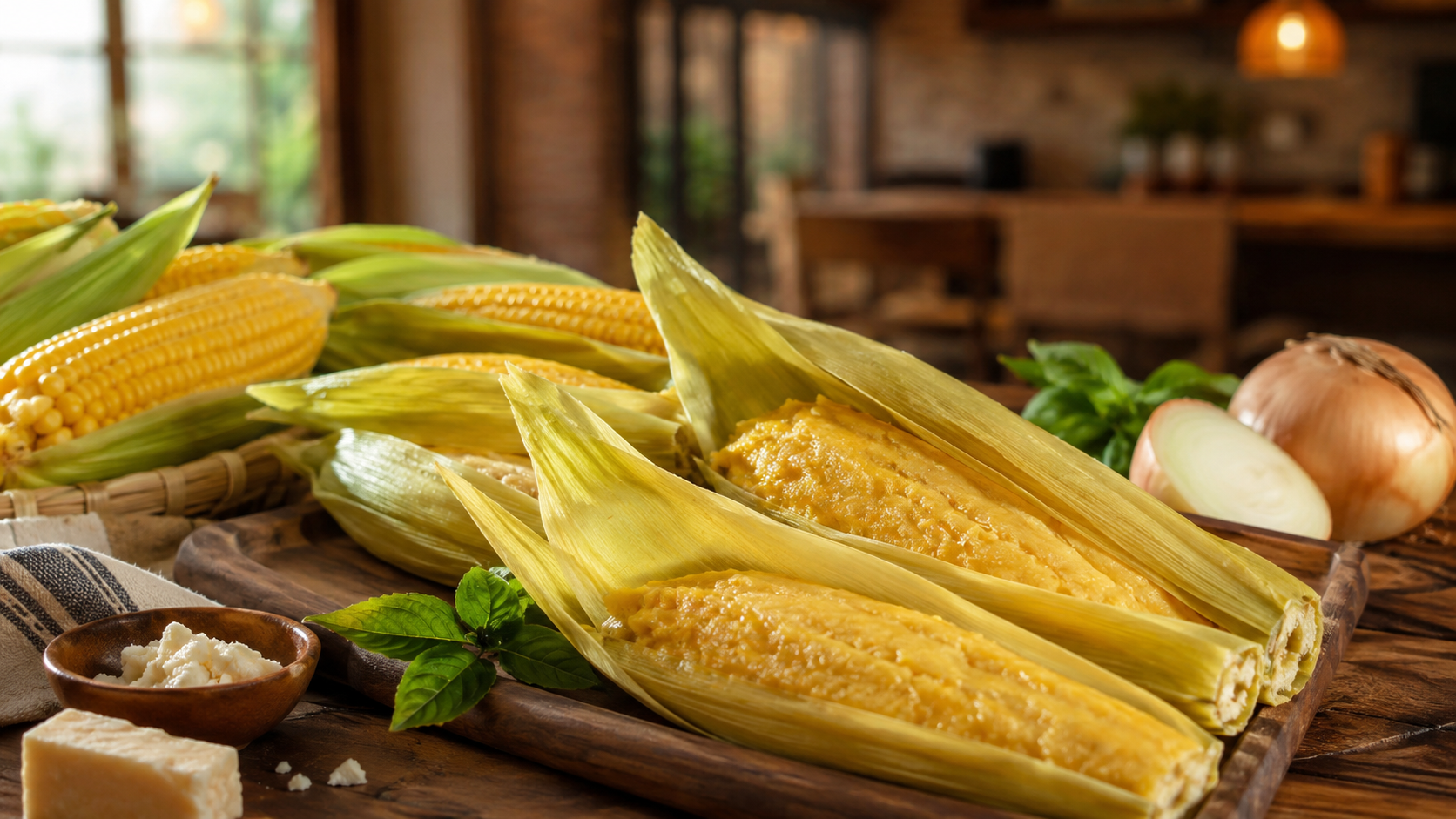
The filling is then placed inside softened corn husks, wrapped into a small parcel, and cooked.
Humita has deep roots in South American food culture. Google Arts & Culture’s feature on Argentine cuisine describes humita as part of the culinary heritage of pre-Columbian civilizations and notes that regional versions exist across Argentina, with corn remaining the essential ingredient.
That long tradition is one reason the best humita often feels more like home cooking than restaurant food.
What Does Authentic Humita en Chala Taste Like?
A good humita should taste primarily of fresh corn.
The natural sweetness of the corn is usually balanced by savory ingredients such as onions, cheese, peppers, herbs, and spices. The texture should be tender and creamy rather than dry or crumbly.
Argentina’s tourism authority describes humita en chala as a soft, sweet-and-savory corn parcel and notes that basil is commonly used in some northwestern Argentine versions.
When you open the husk, you should notice a warm corn aroma immediately.
A well-made humita normally has:
- A rich, recognizable fresh-corn flavor
- A soft and creamy center
- Balanced seasoning
- A gentle sweetness from the corn
- Enough moisture to keep the filling tender
- Cheese that complements rather than overwhelms the corn
- A pleasant aroma from the steamed corn husk
If the filling is extremely dry, bland, watery, or dominated by cheese, it may not provide the traditional experience you are looking for.
How to Find the Best Humita en Chala Near Me
When searching online, start with the exact phrase “humita en chala near me.” You can also try related searches such as “Argentinian restaurant near me,” “northern Argentine food near me,” or “South American humita near me.”
Do not rely only on the restaurant’s star rating.
Open the menu and look specifically for humita en chala. A restaurant may serve a dish called humita that is prepared differently.
Another common version is humita a la olla, where the corn mixture is served directly in a bowl rather than wrapped in corn husks. Argentina’s tourism site distinguishes the two styles, describing humita a la olla as softer and more purée-like while humita en chala is wrapped and somewhat firmer.
Both can be delicious, but if you specifically want humita en chala, check the description before ordering.
Look for Restaurants Specializing in Regional Argentine Cuisine
Your best chance of finding authentic humita is often at an Argentine restaurant that serves food from the country’s northwestern regions.
Humita is particularly associated with places such as Salta, Jujuy, Tucumán, Santiago del Estero, and other parts of northern Argentina. Argentina’s official tourism resources regularly list humita alongside empanadas, tamales, locro, and other characteristic northern dishes.
When checking a local menu, seeing several of these dishes together can be a useful sign that the kitchen takes regional Argentine cooking seriously.
For example, a menu offering:
Humita en chala + tamales + locro + empanadas salteñas
may be a more promising place to start than a general steakhouse that happens to offer one corn dish.
Read Reviews for the Dish, Not Just the Restaurant
A restaurant can have excellent reviews without serving particularly memorable humita.
Search within customer reviews for words such as:
humita, corn, choclo, chala, traditional, Salta, Tucumán, or homemade.
Useful reviews often tell you whether the humita was freshly prepared, creamy, well seasoned, served hot, or similar to versions diners have eaten in Argentina.
Photos are helpful too.
Look for a compact corn-husk parcel that opens to reveal a moist yellow or golden filling. Presentation varies considerably, so appearance alone cannot prove authenticity, but photographs can help you avoid ordering a completely different style of dish.
Ask Whether the Humita Is Homemade
If you have narrowed your choices down to two or three restaurants, call or message them.
Simply ask:
“Is your humita en chala made in-house?”
You can also ask whether it contains cheese, whether it is sweet or savory, and whether it is currently available.
Availability matters because traditional humita depends heavily on corn, and some restaurants may offer it seasonally or as a special rather than as a permanent menu item.
Humita en Chala vs. Tamales: What’s the Difference?
They look similar because both can arrive wrapped in corn husks, but they are not the same dish.
Humita en chala generally focuses on fresh grated or ground corn mixed into a creamy filling, often with squash, onion, cheese, peppers, or herbs.
Northern Argentine tamales, by contrast, commonly use a corn-based dough surrounding a seasoned meat filling. Argentina’s official tourism guide makes the same distinction, describing humita as a fresh-corn preparation while northern tamales often contain beef, pork, or charqui.
If you enjoy corn but prefer a softer vegetarian-friendly dish, humita may be the better choice.
If you want something heartier and meatier, try a tamal as well.
Where Is Humita en Chala Most Popular?
Humita belongs to a wider Andean culinary tradition, but it has an especially strong presence in northern Argentina.
Salta is one of the best-known destinations for the dish. Argentina’s official tourism guide lists humita en chala among the typical foods visitors should try there, alongside empanadas, tamales and locro.
Jujuy and Tucumán are also excellent places to experience regional versions.
In Tilcara, Jujuy, for example, local markets are known for savory and sweeter variations of humita. In Salta and Tucumán, the dish can commonly be found at regional eateries, fairs and traditional peñas.
So, if a local restaurant mentions that its recipe comes from Salta, Jujuy, Tucumán, or another northwestern Argentine tradition, that can provide useful context about the style being served.
What to Eat With Humita en Chala
Humita works well both as a small meal and as part of a larger Argentine feast.
If you are visiting an Argentine restaurant for the first time, consider pairing it with empanadas as a starter.
For a larger meal, you might combine:
Humita en chala, one or two regional empanadas, a small serving of locro, and a simple Argentine dessert.
Traditional northern Argentine restaurants frequently serve humita alongside tamales, empanadas, and locro, making it easy to sample several regional specialties in one meal.
Signs You’ve Found Great Humita en Chala
The best version does not need to be fancy.
What matters most is the corn.
Fresh corn should remain the dominant flavor, while onions, peppers, cheese, squash and spices support it.
A memorable humita should be:
Creamy: The filling should feel soft and moist.
Fresh tasting: Corn should remain recognizable.
Balanced: Sweetness, salt, herbs and spices should work together.
Aromatic: Opening the husk should release the smell of steamed corn.
Properly cooked: The mixture should hold together without becoming tough.
Comforting: Humita is rustic food. Excellent versions often succeed through simplicity rather than elaborate presentation.
Can You Get Vegetarian Humita en Chala?
Often, yes.
Many traditional humita preparations are based on corn, vegetables, herbs and cheese rather than meat. Argentina’s tourism sources describe versions containing fresh corn, squash, onion, cheese and spices.
However, recipes vary from restaurant to restaurant.
If you follow a vegetarian diet, confirm that no meat stock, animal fat or meat-based ingredient has been added.
For vegans, ask whether the restaurant can prepare the dish without cheese or other dairy products.
Is Humita en Chala Gluten-Free?
Corn itself does not contain gluten, and the basic ingredients used in traditional humita are often naturally gluten-free.
However, restaurant preparation can introduce other ingredients or cross-contact with gluten-containing foods.
Anyone with coeliac disease, a wheat allergy or a medical need to avoid gluten should therefore ask the restaurant directly about ingredients and kitchen handling rather than assuming every humita is gluten-free.
Is Humita Spicy?
Not necessarily.
Traditional recipes vary widely.
Some are mild and emphasize sweet corn and creamy cheese, while others use chilli or peppers for extra heat. Argentina’s tourism guide notes both sweet and savory regional versions, including preparations seasoned with bell pepper and paprika.
If you dislike spicy food, ask before ordering.
Final Thoughts: Finding the Best Humita en Chala Near You
The search for the best humita en chala near me is really a search for fresh ingredients, traditional preparation, and a restaurant that understands regional South American cooking.
Start with Argentine and Andean restaurants nearby. Check menus carefully, read reviews that specifically mention humita, look at recent food photos, and ask whether the dish is prepared in-house.
Most importantly, look for a humita where the flavor of fresh corn remains the star.
Whether you discover it at a family-run Argentine restaurant, a Latin American food market, a regional festival, or someday while travelling through Salta or Jujuy, a well-made humita en chala offers one of the simplest and most comforting introductions to northern Argentine cuisine.
Frequently Asked Questions About Humita en Chala
What is humita en chala?
Humita en chala is a traditional corn-based South American dish. In Argentine versions, grated or ground fresh corn is commonly combined with ingredients such as onion, squash, cheese and spices, wrapped in corn husks and cooked.
How do I find the best humita en chala near me?
Search for “humita en chala near me,” “Argentinian restaurant near me,” and “northern Argentine food near me.” Then check menus, recent photos and reviews that specifically mention humita rather than relying only on overall restaurant ratings.
What is the difference between humita and humita en chala?
Humita refers broadly to the corn preparation. Humita en chala is wrapped and cooked in corn husks, while humita a la olla is cooked and served in a pot or bowl.
What is the difference between humita en chala and a tamal?
Humita usually centers on fresh corn and may include vegetables, cheese and seasonings. Argentine tamales more commonly involve corn dough combined with or wrapped around a seasoned meat filling.
Is humita en chala vegetarian?
Many versions are vegetarian because they contain corn, vegetables, herbs and cheese rather than meat. Recipes vary, so confirm the ingredients with the restaurant.
Is humita en chala vegan?
Traditional versions often contain cheese, so they are not automatically vegan. Some restaurants may offer dairy-free variations.
Is humita en chala sweet or savory?
It can be either. Fresh corn naturally brings sweetness, while onions, cheese, peppers and spices add savory flavors. Some regional versions also include extra sugar or stronger seasonings.
Where is humita en chala traditionally eaten?
Humita is associated with Andean food traditions and is especially prominent in northern Argentina, including regions such as Salta, Jujuy and Tucumán.
What should good humita en chala taste like?
A good humita should have a noticeable fresh-corn flavor, a moist and creamy texture, balanced seasoning, and a pleasant sweet-savory character.
Can I order humita en chala for takeaway?
Many restaurants may offer it for takeaway, although availability varies. Because it is wrapped in corn husks, humita generally travels conveniently, but it is best eaten warm. Check the restaurant’s current takeaway or delivery options before ordering.
Read also: Looking for the Best Asado Negro Near Me?