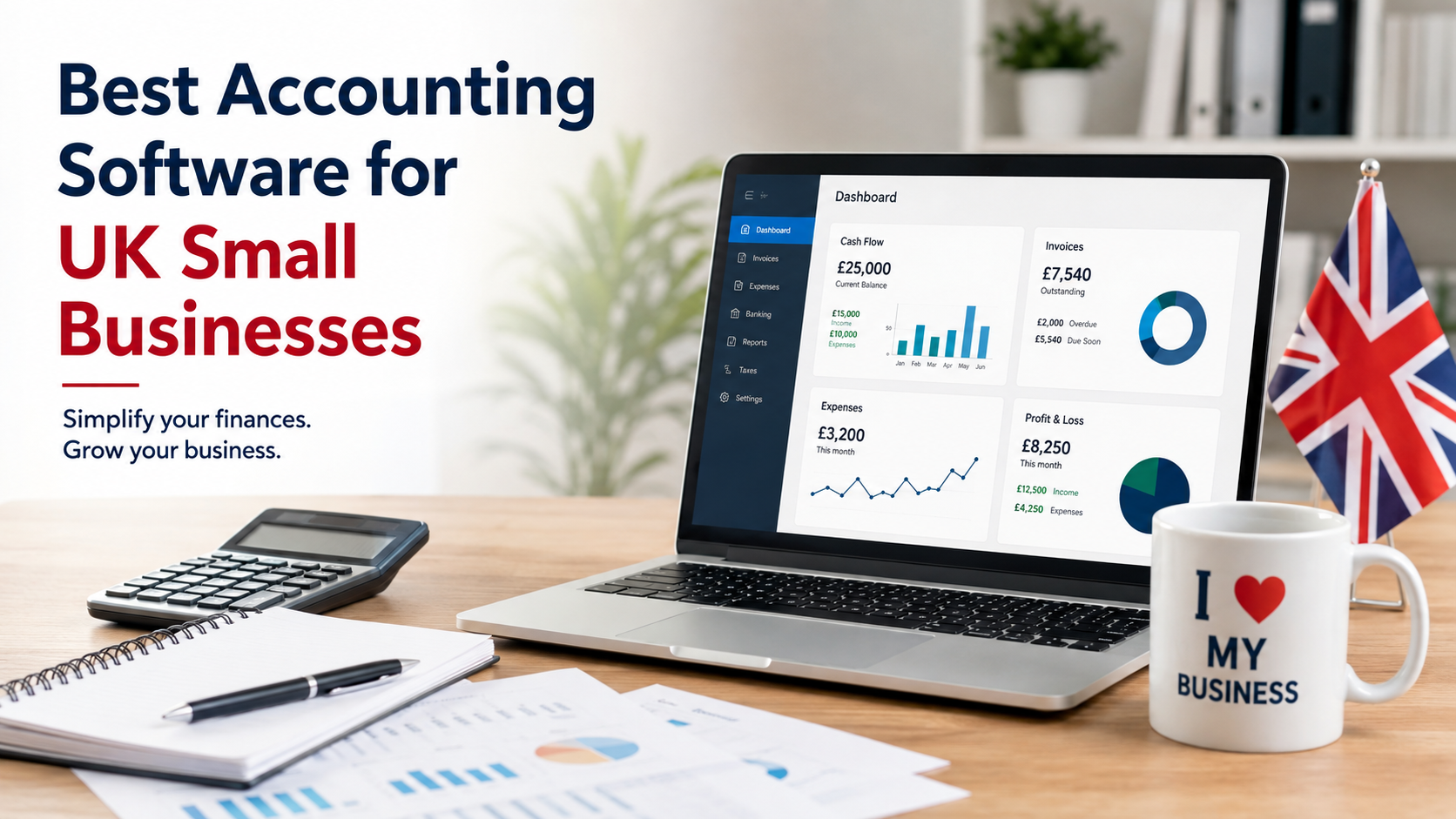

Finding the Best Accounting Software for UK Small Businesses can make running a business much easier. The right software can help you send invoices, record expenses, check bank transactions, understand cash flow, and keep important financial records in one place.
For UK businesses, choosing suitable software is also important for tax. HMRC says all VAT-registered businesses must use compatible software to keep digital VAT records and file VAT Returns under Making Tax Digital. Making Tax Digital for Income Tax also started on 6 April 2026 for qualifying sole traders and landlords with income over £50,000.
There is no single accounting program that is perfect for every small business. A sole trader may want something simple and affordable. A growing company may need more users, better reports, stock tracking, payroll tools, or automation.
Here are five strong options to consider.
Xero
Xero is a popular all-round accounting choice for small businesses. It can help with invoices, bills, expenses, financial records, and cash-flow management.
Xero states that its UK accounting software is HMRC-recognised for Making Tax Digital. It supports MTD for VAT and MTD for Income Tax, helping eligible businesses keep digital records and prepare their tax information.
Xero also provides a mobile accounting app. Business owners can send invoices, upload bills, record expenses, and check cash flow from a phone or tablet.
This makes Xero useful for owners who often work outside an office. It can also suit growing businesses that want a cloud-based system with many accounting features.
QuickBooks Online
QuickBooks Online is another strong choice for UK small businesses. It can help business owners send invoices, manage expenses, organise financial records, and work on VAT and Income Tax tasks.
QuickBooks says its UK plans are ready for Making Tax Digital for Income Tax and VAT. Its VAT software is available across its main QuickBooks Online subscription levels.
Because the system works online, financial information can be managed without keeping everything on one office computer.
QuickBooks can be useful for sole traders and small companies that want everyday accounting jobs kept together. Business owners should compare its plans carefully because different plans can contain different features.
FreeAgent
FreeAgent is designed especially for small UK businesses. It includes tools for invoices, expenses, tax information, and VAT.
One of its main strengths is its focus on UK tax work. FreeAgent says businesses can submit VAT and Self Assessment returns directly to HMRC. It can also automatically prepare MTD-compatible VAT returns and allow users to file them with HMRC.
This can make FreeAgent a useful option for freelancers, contractors, sole traders, and small limited companies.
If you want accounting software that places tax tasks at the centre of the experience, FreeAgent is worth considering.
Sage Accounting
Sage is another well-known option for small UK businesses. Its accounting software includes tools for invoices, VAT, expenses, payments, payroll options, and bank reconciliation.
Bank reconciliation means checking that the transactions in your accounting records match the money going in and out of your bank account. Sage can import transactions from connected banks and help users match them with their records.
Sage also says its accounting software supports Making Tax Digital requirements and can connect with HMRC for digital VAT filing.
There is also a free Sage Sole Trader option aimed at non-VAT-registered sole traders with simple accounting needs.
Sage may be a good choice for businesses that want straightforward accounting tools with options to add more features as they grow.
Zoho Books
Zoho Books is a useful choice for businesses that want accounting tools together with automation.
Its UK software can help users create invoices, record expenses, reconcile bank transactions, keep digital records, and produce financial reports. Zoho describes the UK version as MTD-ready.
Zoho Books also allows businesses to prepare and file VAT returns directly with HMRC. Depending on the plan, businesses can also use tools for projects, stock management, reports, and other accounting work.
Zoho offers different subscription levels, including a free plan, although the features available depend on the plan selected.
It may be especially useful for businesses that already use other Zoho services.
How to Choose the Best Accounting Software for UK Small Businesses
The Best Accounting Software for UK Small Businesses should make everyday work simpler.
Start by thinking about what your business actually does. A very small company may only need invoices, expense records, bank connections, and simple reports. A growing company may need stock management, payroll connections, several users, project tracking, or more detailed financial reports.
UK tax support should also be checked carefully. VAT-registered businesses need compatible software for Making Tax Digital for VAT. Eligible sole traders and landlords may also need compatible software for Making Tax Digital for Income Tax.
Ease of use matters too. Software is not helpful if it is so difficult that you avoid using it.
Check the features, full ongoing price, bank connections, accountant access, reports, and support before making your final choice.
Which Accounting Software Is Best?
Xero is a strong all-round option for businesses that want cloud accounting and useful mobile features.
QuickBooks Online can work well for businesses that want invoicing, expenses, tax tools, and everyday bookkeeping in one system.
FreeAgent may be especially attractive to freelancers, contractors, sole traders, and small companies that want strong UK tax features.
Sage Accounting can suit businesses that want traditional accounting tools together with options for payroll and future growth.
Zoho Books may suit owners looking for accounting, automation, project tools, and flexible subscription choices.
The best choice depends on what your own business needs rather than which program has the longest list of features.
FAQs
What should a small business look for in accounting software?
Look for simple invoicing, expense tracking, bank connections, useful financial reports, and the UK tax features that your business needs.
Do VAT-registered UK businesses need compatible accounting software?
Yes. HMRC says VAT-registered businesses must use compatible software to maintain digital VAT records and file VAT Returns.
Can free accounting software be enough?
Yes. A free plan may be enough for a business with very simple needs. However, always check its limits and make sure it includes the features your business requires.
Can my accountant use my accounting software?
Many cloud accounting platforms allow accountants or advisers to work with a business’s financial records after the owner gives them suitable access.
Should I choose accounting software only because it is cheap?
No. Price is important, but useful features and ease of use matter too. Cheap software can become a poor choice if you later need to buy several extra services.
Conclusion
Choosing the Best Accounting Software for UK Small Businesses is easier when you focus on what your business really needs.
Xero, QuickBooks Online, FreeAgent, Sage Accounting, and Zoho Books all offer useful accounting features, but their strengths are different. A small sole trader may only need invoices, expenses, bank records, and simple tax tools. A growing company may need stock management, payroll connections, project tracking, more users, or stronger reports.
UK tax requirements also make the choice important. VAT-registered businesses must use compatible software for Making Tax Digital for VAT. Making Tax Digital for Income Tax also applies to qualifying sole traders and landlords according to HMRC’s income thresholds.
Before choosing, make a short list of the features your business actually needs. Compare suitable plans, check the normal ongoing cost, and make sure the software supports the UK tax requirements that apply to you.
The best accounting system is not always the one with the most tools. It is the one that makes your daily accounting easier, keeps your records organised, supports the correct UK tax work, and helps you understand where your business money is going.
Read also: Renting a Home in the UK: Warning Signs to Know Before You Sign