
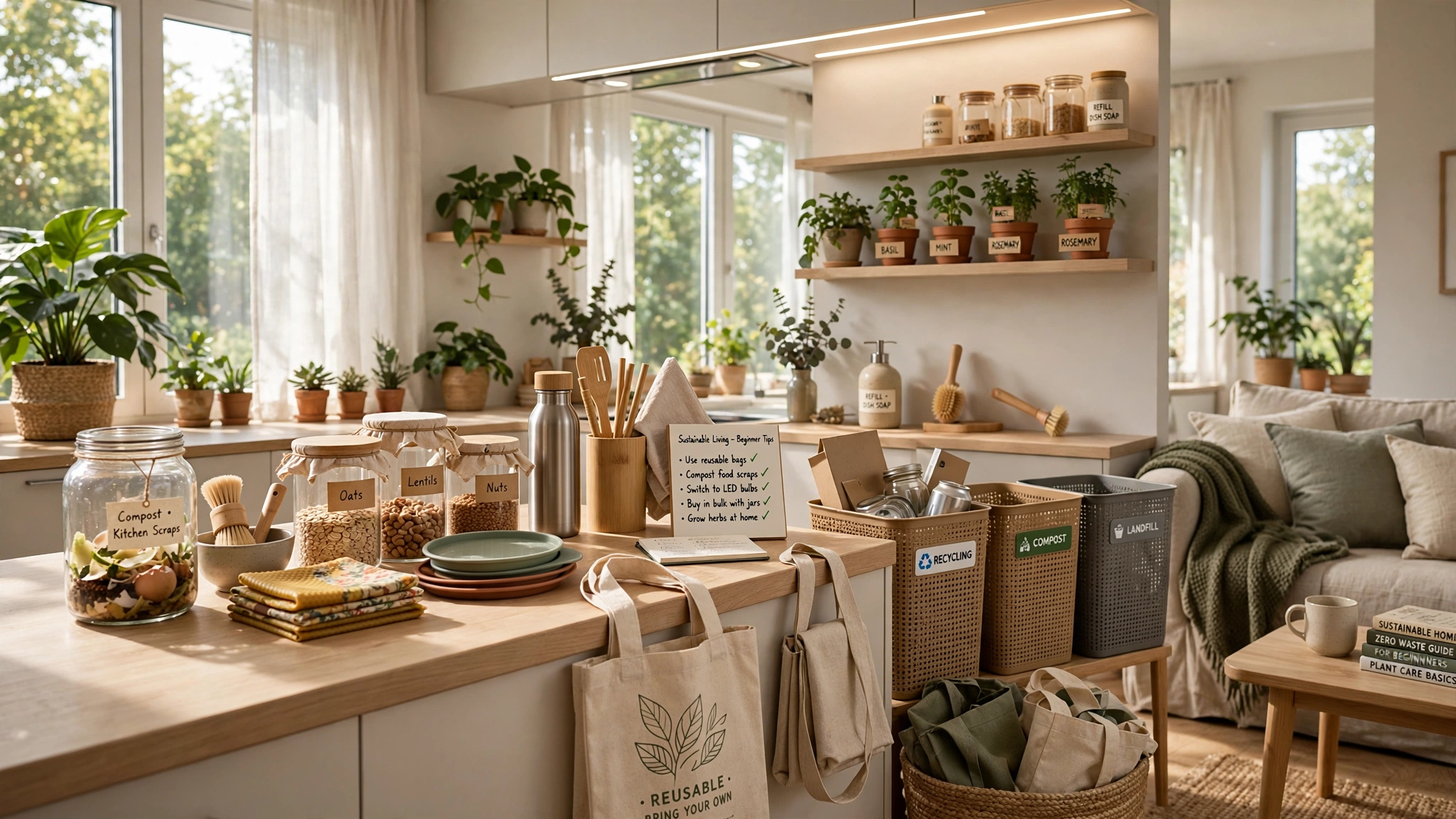

Making your home more sustainable can sound like a project involving solar panels, expensive appliances, zero-waste shopping, and a complete lifestyle overhaul. It doesn’t have to.
The most useful beginner tips for sustainable living at home are usually much simpler: use what you already own, waste less food, reduce unnecessary energy and water use, and think a little longer before buying something new.
You also don’t need to make every change at once. Sustainable living works better when new habits fit naturally into your routine and budget. Start with the areas where your household uses the most resources or creates the most waste, then improve gradually.
Here are 12 realistic ways to begin.
What Sustainable Living at Home Really Means
Sustainable living is less about owning products labeled “eco-friendly” and more about reducing the resources your household consumes unnecessarily.
That includes electricity, heating and cooling, water, food, clothing, packaging, furniture, electronics, and everyday household products. A sustainable approach considers the whole life of an item: how much you buy, how long you use it, and what happens when you no longer need it.
This is why reducing consumption and keeping existing products in use can matter more than recycling alone. UNEP’s zero-waste guidance encourages individuals to reduce consumption first, reuse and repair products when possible, and recycle appropriately once items can no longer be reused.
For beginners, that creates a useful rule:
Buy less. Use things longer. Waste less.
12 Beginner Tips for Sustainable Living at Home
1. Find Out What You’re Currently Wasting
Before buying reusable containers or replacing appliances, spend a week observing your existing habits.
Look at what regularly ends up in the rubbish. Check which food gets thrown away. Notice lights or electronics that stay on unnecessarily. Think about how often you run half-full washing machines or dishwashers.
You don’t need a detailed environmental audit. Simply identifying two or three recurring forms of waste gives you somewhere practical to start.
For example, if vegetables repeatedly spoil in your refrigerator, improving meal planning will probably do more good than buying another set of reusable shopping bags.
2. Reduce Unnecessary Home Energy Use
Begin with energy you’re paying for but not actually benefiting from.
Turn lights off in empty rooms. Use sleep or power-saving settings on computers and televisions. Unplug rarely used equipment when practical, or connect groups of devices to a switchable power strip.
Some electronics continue drawing small amounts of electricity while switched off or in standby mode, commonly described as standby or phantom loads. The U.S. Department of Energy recommends shutting down or unplugging devices that don’t need to remain powered.
Heating and cooling deserve attention too. Instead of aiming for extreme indoor temperatures, use reasonable thermostat settings, close doors and windows when heating or air conditioning is running, and deal with obvious drafts where possible.
3. Make Laundry More Efficient
You can make laundry more sustainable without purchasing a new washing machine.
Wash full loads when appropriate, follow your machine’s recommended load size, and use cooler water for clothing that doesn’t require a hot wash.
ENERGY STAR notes that heating the water accounts for a large majority of the energy associated with a typical clothes washer’s wash cycle, which is why cold-water washing can significantly reduce the energy needed for many loads.
Air-dry clothing when climate, space, and fabric care instructions make it practical. It saves dryer energy and can also reduce unnecessary exposure to high heat.
4. Use Hot Water More Thoughtfully
Saving water and saving energy often overlap because water frequently needs to be pumped, treated, and—in your home—heated.
Take reasonably timed showers rather than letting hot water run unnecessarily. Turn off the tap while brushing your teeth or doing tasks that don’t require continuous water flow. Fix dripping fixtures instead of accepting them as normal.
Efficient faucets, aerators, and showerheads can also reduce water consumption without requiring major renovations. EPA WaterSense guidance notes that water-efficient faucets and showerheads can reduce both water consumption and the energy associated with hot water.
Outside the United States, look for equivalent independently verified water-efficiency labels.
5. Make Food Waste Visible
One of the best places to improve household sustainability is the kitchen.
UNEP reports that households account for roughly 60% of food waste globally, making waste prevention at home an important part of the wider food-waste problem.
Start by planning a few meals before shopping. Check your refrigerator and cupboards first so you don’t accidentally buy duplicates.
Create an “eat first” area for food approaching the end of its usable life. Freeze suitable leftovers and ingredients when you know you won’t eat them in time.
The goal isn’t a perfectly empty bin. Some scraps and inedible parts are unavoidable. Concentrate first on edible food you purchased but never used.
6. Build More Meals Around Plants
You don’t have to adopt a particular diet to make your food habits more sustainable.
Try gradually building more meals around vegetables, beans, lentils, grains, nuts, and other plant foods that you already enjoy. A vegetable curry, lentil soup, bean burrito, or pasta with a vegetable-based sauce can become a regular meal without requiring specialist products.
UNEP includes dietary shifts toward more plant-based foods among the approaches that can support more sustainable food consumption.
Make changes that work nutritionally, culturally, and financially for your household rather than following rigid internet rules.
7. Buy Less Before Trying to Buy “Green”
One of the easiest sustainable-living traps is replacing perfectly usable belongings with environmentally marketed alternatives.
You rarely need a complete set of new bamboo, glass, metal, or organic products just to begin living more sustainably.
Keep using the water bottle, storage containers, towels, furniture, dishes, and bags you already own if they’re still functional and safe. When something genuinely needs replacing, then consider durability, repairability, efficiency, materials, and how long you’re likely to use the replacement.
A product you don’t need is still a product that required resources to make.
8. Replace Disposable Items Gradually
Reusable alternatives make the most sense when they replace disposable products you regularly consume.
Examples might include washable cleaning cloths instead of repeatedly buying disposable wipes, reusable shopping bags, refillable drinking bottles, or durable food containers.
But don’t turn reuse into another shopping category.
Start with what you already have. An old towel can become cleaning cloths. A sturdy container can store leftovers. A shopping bag doesn’t have to match an Instagram-worthy zero-waste aesthetic to be useful.
Sustainability should reduce consumption, not create another reason to consume.
9. Repair, Maintain, Borrow, and Buy Used
Extending the useful life of household goods helps reduce the need for new materials and manufacturing.
Before replacing something, ask whether it can be cleaned, repaired, sharpened, patched, updated, or given a new part.
For items you only need occasionally—a drill, ladder, specialty kitchen appliance, party equipment, or gardening tool—borrowing or renting may make more sense than ownership.
Second-hand furniture, books, clothing, tools, and household goods can also be practical choices when their condition and safety are suitable.
UNEP’s circularity guidance specifically identifies reuse and repair as important ways of keeping products and materials in use longer.
10. Recycle Correctly, Not Optimistically
Recycling helps, but putting every questionable object into a recycling container can create problems rather than solve them.
Rules vary considerably between municipalities and countries. Check your local collection service to learn which plastics, papers, metals, cartons, glass, batteries, electronics, and other materials are accepted.
Don’t assume an item is recyclable simply because it has a recycling symbol or looks similar to something that is accepted locally.
The EPA’s waste-management hierarchy places reduction and reuse ahead of recycling, which is another reason to focus on preventing waste in the first place.
11. Choose Efficient Appliances When Replacement Time Comes
You don’t necessarily need to replace a working refrigerator, washing machine, or air conditioner immediately in the name of sustainability.
Instead, make efficiency part of your decision when an appliance actually needs replacement.
Compare the energy-consumption information required or provided in your country rather than looking only at the purchase price. Also consider appliance size. Buying a much larger refrigerator or air conditioner than your household needs can undermine some of the benefits of choosing an efficient model.
Where available, reputable government-backed efficiency labels can make comparisons easier. The exact certification systems and standards vary by country.
12. Turn Good Intentions Into Household Systems
The easiest sustainable habits are the ones that don’t require you to remember them constantly.
Put reusable shopping bags somewhere you’ll see them before leaving home. Keep recycling containers near the places waste is created. Store leftovers where they’re visible rather than hidden behind new groceries.
Create a small box for items that need repairing. Keep a donation area for usable things you no longer need. Add a recurring reminder to check food before grocery shopping.
Designing your environment around the habit usually works better than depending on motivation every day.
Common Sustainable-Living Mistakes Beginners Make
Trying to Change Everything at Once
A huge list of environmental goals can become exhausting quickly. Pick a few habits and make them routine before adding more.
Throwing Away Useful Items to Replace Them With Eco Products
Replacing functional belongings creates waste and requires new materials. Use what you own first unless there’s a genuine safety, health, or efficiency reason to replace it.
Focusing Only on Recycling
Recycling matters, but it happens after a product has already been manufactured, transported, purchased, and discarded. Waste prevention, reuse, and repair address consumption earlier in the product lifecycle.
Assuming Sustainable Choices Must Be Expensive
Some upgrades cost money, but many beginner habits don’t. Wasting less food, using less hot water, avoiding unnecessary purchases, borrowing rarely used items, and reducing avoidable electricity use may actually lower household expenses.
Chasing Perfection
Real homes have different climates, budgets, family sizes, rental restrictions, accessibility needs, and local infrastructure.
A renter may not be able to improve insulation. A family with medical laundry requirements may need hotter wash cycles. Someone living where tap water isn’t reliably safe may need packaged drinking water.
Sustainability works best when it accounts for real circumstances rather than demanding identical behavior from everyone.
A Simple 30-Day Sustainable Home Starter Plan
If you’re unsure where to begin, divide your first month into four manageable stages.
Week 1: Observe. Track food you throw away, unnecessary purchases, electricity habits, water use, and the contents of your household rubbish.
Week 2: Reduce waste. Plan meals before shopping, create an “eat first” section in the refrigerator, begin using reusable items you already own, and check your local recycling rules.
Week 3: Focus on energy and water. Wash suitable clothing in cold water, run sensible full loads, turn off unused equipment, deal with obvious leaks, and adjust heating or cooling habits where practical.
Week 4: Build systems. Create convenient places for recycling, repairs, donations, leftovers, shopping bags, and other sustainable routines.
At the end of the month, keep the habits that genuinely worked. Then choose one or two additional improvements.
A sustainable household isn’t created by one dramatic weekend. It’s built through routines that continue long after the initial enthusiasm disappears.
FAQs
1. What are the easiest beginner tips for sustainable living at home?
Start with reducing waste rather than buying new products. Plan meals so less food is discarded, switch off unused lights and equipment, use water thoughtfully, wash suitable laundry in cooler water, reuse what you already own, and learn your local recycling rules. Pick two or three habits first so they have a chance to become routine.
2. Do I need to spend money to live more sustainably?
No. Many useful changes cost little or nothing. Avoiding unnecessary purchases, using leftovers, reducing hot-water use, switching off unused equipment, borrowing occasional-use tools, repairing belongings, and keeping products longer can all reduce resource consumption without requiring expensive upgrades. Larger investments such as insulation or efficient appliances can be considered separately when your home and budget allow.
3. Should I replace old products with eco-friendly versions?
Usually not simply for the sake of replacing them. If an item is still functional and safe, continuing to use it often avoids unnecessary consumption. When something wears out or genuinely needs replacing, that’s a better time to compare durable, repairable, reusable, or efficient alternatives.
4. Is recycling enough to make a home sustainable?
Recycling is useful, but it shouldn’t be the whole strategy. Reducing unnecessary purchases, preventing food waste, reusing products, and repairing belongings can prevent waste before recycling becomes necessary. Local recycling rules also vary, so materials should be separated according to the requirements of your own collection system.
5. What’s the best first room to make more sustainable?
For many households, the kitchen is a practical starting point because it combines food, packaging, water, appliances, and everyday purchasing habits. Begin by checking what food is regularly discarded, using leftovers more effectively, avoiding unnecessary single-use items, and running appliances efficiently. Your best starting room, however, is whichever part of your home has the most obvious waste.
6. Can renters practice sustainable living at home?
Yes. Renters may have limited control over insulation, windows, heating systems, or major appliances, but many habits don’t require structural changes. Reducing food waste, washing clothes efficiently, using less hot water, buying less, repairing possessions, using reusable products, and switching off unnecessary electronics are generally possible without modifying the property.
7. How can I make sustainable habits stick?
Make them convenient. Put reusable bags near the door, keep leftovers visible, locate recycling containers where waste is produced, and schedule regular refrigerator or pantry checks. Start with a few habits instead of dozens. Once a behavior becomes part of your normal household routine, it requires much less conscious effort to maintain.
Conclusion
The best beginner tips for sustainable living at home aren’t about creating a perfect zero-waste household. They’re about noticing where resources are being wasted and making practical improvements that you can maintain.
Start with food, energy, water, and purchasing habits. Use existing possessions for longer, repair before replacing when practical, recycle according to local rules, and introduce new habits gradually.
You don’t need to transform your home overnight. A handful of sensible changes repeated for years is far more useful than an ambitious sustainability plan abandoned after a few weeks.