
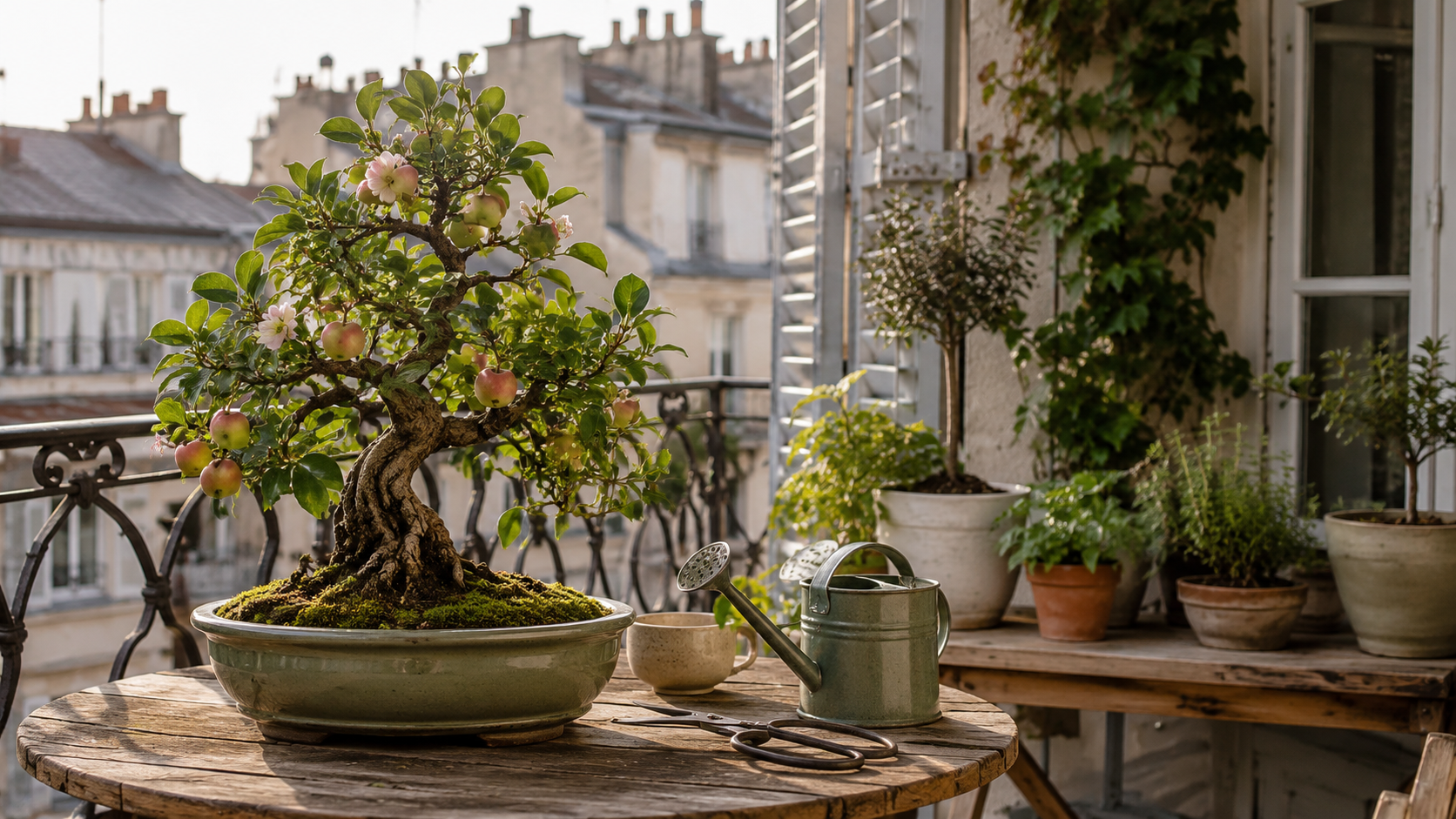

crescita del gardening domestico in Europa, piccoli spazi, balconi, piante in vaso.
Across Europe, more people are rediscovering the value of plants in everyday living spaces. Gardening is no longer limited to large gardens, rural homes or traditional outdoor areas. Today, balconies, terraces, windowsills and small patios are being transformed into green corners where people can grow ornamental plants, herbs, flowers and even miniature trees.
This change reflects a wider lifestyle trend. Many people want homes that feel calmer, more natural and more connected to the seasons. At the same time, urban living often means working with limited space. This is why compact forms of gardening are becoming increasingly popular. They allow people to experience the pleasure of plant care without needing a large outdoor area.
Among the most fascinating choices for small-space gardening are bonsai apple trees. These miniature fruit trees combine the ancient art of bonsai with the charm of seasonal flowering and, in some cases, small decorative fruits. They are visually striking, but they also require patience, observation and a more mindful approach to plant care.
For readers interested in starting with miniature fruit trees, Bioges & Co offers a practical guide to bonsai apple trees: https://www.biogesandco.com/apple-bonsai-tree-how-to-take-care-of-a-bonsai-tree-plant-care/
Why bonsai apple trees appeal to modern plant lovers
Bonsai trees have always carried a sense of discipline and beauty. They are not simply small plants in pots; they are living forms shaped slowly over time. A bonsai apple tree adds another level of interest because it follows the natural rhythm of a fruit tree in miniature form.
In spring, it may produce delicate blossoms. Later in the season, depending on the variety and growing conditions, it can develop small apples that give the tree a distinctive and poetic character. For many people, this seasonal transformation is one of the reasons bonsai cultivation feels so rewarding.
Bonsai apple trees are also suitable for people who enjoy decorative plants but want something more meaningful than a simple ornament. They invite care and attention. Their appearance changes throughout the year, and every small adjustment in watering, pruning or positioning can influence the way they grow.
This makes them particularly attractive for people living in apartments or homes with limited outdoor space. A balcony, terrace or sheltered patio can become a place where a small tree develops over time, bringing a sense of nature into an urban environment.
The role of light, water and positioning
Like most fruit trees, bonsai apple trees need good light. A bright position is important for healthy growth, flowering and overall vitality. In many cases, they are best kept outdoors or in a very bright sheltered area, depending on the local climate and the specific growing conditions.
A lack of light can weaken the plant, reduce flowering and affect leaf quality. However, excessive heat or harsh exposure can also create stress, especially when the tree is grown in a small pot. This is why positioning should be chosen carefully. A place with good brightness, fresh air and some protection from extreme weather is often ideal.
Watering is equally important. Bonsai trees grow in restricted containers, which means their roots have access to a limited amount of soil. The substrate can dry more quickly than garden soil, especially during warm periods. At the same time, too much water can damage the roots and reduce oxygen in the growing medium.
The best approach is to observe the soil and the plant regularly. Rather than watering automatically, it is better to check whether the substrate is beginning to dry and adjust the routine according to the season, temperature and exposure.
Why container plants need balanced nutrition
Growing plants in containers is practical, but it also creates specific challenges. In open ground, roots can explore a wider area and benefit from natural soil processes. In a pot, everything the plant needs must come from a smaller and more controlled environment.
Over time, watering can gradually remove nutrients from the substrate. The plant continues to absorb what it needs for leaves, roots, shoots, flowers and fruit, but the available reserves are limited. This is why bonsai and other potted plants often benefit from a more structured and balanced feeding routine.
For bonsai apple trees, nutrition must be handled with care. The objective is not to force uncontrolled growth, but to support healthy development while maintaining the miniature form of the tree. Too much feeding can create excessive shoots and disturb the balance of the plant. Too little nutrition can lead to weak growth, pale leaves or reduced vitality.
A sustainable approach focuses on consistency and moderation. Feeding should respect the natural rhythm of the tree, especially during the active growing season. It should also be adapted to the type of plant, its stage of development and the condition of the substrate.
The importance of soil vitality
Healthy plant growth depends not only on nutrients, but also on the quality of the growing environment. Soil or substrate should support roots, allow air circulation and retain moisture without becoming waterlogged. In bonsai cultivation, this balance is especially important because the plant lives in a small container.
When the growing environment becomes tired or compacted, roots may struggle to function properly. The plant may absorb water and nutrients less efficiently, even if feeding is applied. This is one of the reasons many gardeners are now paying more attention to soil vitality and not only to fertilisation.
In container gardening, where soil resources are naturally limited, a bio activator can support the growing environment and help plants make better use of nutrients over time: https://www.biogesandco.com/product-category/bio-activators/
This type of approach fits well with the growing interest in sustainable plant care. Rather than simply adding more products, gardeners are learning to support the conditions that allow plants to grow in a balanced way. The goal is to create healthier plants through better care, not through excess.
Pruning and shaping bonsai apple trees
Pruning is one of the defining aspects of bonsai care. It helps maintain the size, shape and balance of the tree. With bonsai apple trees, pruning should be done gradually and thoughtfully. The aim is to guide the plant, not to force it unnaturally.
Maintenance pruning helps manage new growth during the season, while structural pruning defines the long-term shape of the tree. Clean, sharp tools should be used, and large or unnecessary cuts should be avoided. A bonsai should look balanced and natural, even when carefully shaped by human hands.
Patience is essential. Bonsai cultivation is not about immediate results. It is about observing how the tree responds over time and making small adjustments when needed. This slow process is part of the appeal, especially for people looking for a more mindful form of gardening.
A sustainable trend for European homes
The growing interest in bonsai apple trees reflects a broader change in European home gardening. People are looking for plants that offer more than decoration. They want greenery that brings character, seasonal rhythm and a sense of care into the home environment.
At the same time, there is a stronger focus on sustainability. Gardeners are becoming more aware of waste, overwatering, poor soil management and unnecessary replacement of struggling plants. Instead of treating plants as temporary decorative items, many people are learning how to care for them properly over the long term.
This mindset is particularly important for bonsai. A bonsai tree can live for many years when cared for correctly. It can become part of a home, a balcony or a garden corner, developing character with each season. That long-term relationship makes bonsai cultivation very different from ordinary decoration.
Final thoughts
Bonsai apple trees are a beautiful example of how small-space gardening can be both practical and meaningful. They allow people to grow a miniature fruit tree even when they do not have access to a large garden. They bring flowers, structure, seasonal interest and a sense of patience into modern living spaces.
Their care requires attention to light, watering, pruning, substrate quality and balanced nutrition. When these elements work together, the tree can remain healthy and expressive over time.
As sustainable plant care continues to grow across Europe, bonsai apple trees are likely to attract more interest from people who want to combine beauty, nature and mindful gardening. They show that even the smallest outdoor space can hold something living, elegant and deeply rewarding.
Read more: How to Get Started With Becoming a Sole Trader in the UK