

Choose the right bicycle size for a child using height, inside-leg measurement and wheel size, with fitting advice and first-ride safety checks
Data checked on 5 November 2026
Choose a child’s bicycle by inside-leg measurement and minimum saddle height, then use age only as a broad guide. The child should control the bicycle confidently at its lowest practical setting. A bike size calculator can narrow the range before an in-person fit check.
Wheel labels such as 14, 16 or 20 inches describe the wheel, not the frame. Two bicycles with the same wheel size can have different saddle heights, reach and weight. Always check the manufacturer’s chart for the exact model.
- Inside leg gives a better fit signal than age because children grow at different rates.
- A child should reach the brakes comfortably without stretching or changing hand position.
- Do not buy a bicycle that is unsafe today because the child may grow into it later.
- Balance bicycles teach steering and balance before pedals add another task.
- Check saddle height, brakes, tyres and controls before the first ride.
Children’s bicycle size chart
This table combines the inside-leg thresholds published in Tyred’s calculator with typical ages. Treat each row as a starting point, not a substitute for trying the bicycle.
| Inside leg from | Likely wheel size | Typical age | Fit check |
| About 35 to 40 cm | 12 to 14 inches | 2 to 4 | Feet reach the ground securely on a balance bicycle |
| 40 cm | 14 inches | 3 to 4 | Minimum saddle height suits the measured leg |
| 44 cm | 16 inches | 4 to 5 | Child starts and stops without adult support |
| 47 cm | 18 inches | 4 to 6 | Brake levers remain within easy reach |
| 53 cm | 20 inches | 5 to 7 | Child can stand over and steer comfortably |
| 61 cm | 24 inches | 8 to 10 | Reach remains relaxed with slightly bent elbows |
| 67 cm | 26 inches | 10 to 12 | Compare junior and small adult models carefully |
Ranges overlap because bicycle geometry varies. Halfords also advises that height and inside leg usually guide sizing better than age. Where two sizes appear possible, compare minimum saddle height and the child’s control on both.
How to measure your child correctly
Ask the child to wear the shoes they normally use for riding. Stand them upright against a wall, with their feet slightly apart.
Place a hardback book between their legs and raise it gently until it sits like a saddle. Measure from the floor to the top edge of the book. Record centimetres because many children’s brands publish metric saddle heights.
Measure standing height as a secondary check. Repeat both measurements if the child moved or bent their knees. A one-centimetre difference can matter near the lower limit of a small bicycle.
The resulting number is an inside-leg measurement, not a required saddle height. Beginners often need a lower position than confident riders, because reaching the ground provides reassurance during starts and stops.
Why minimum saddle height matters
Wheel size groups the market, but minimum saddle height determines whether a particular bicycle fits now. One 16-inch model may sit several centimetres lower than another because its frame and saddle differ.
For a first balance bicycle, the child should usually place both feet securely on the ground while seated. Their knees should retain enough bend to push the bicycle forwards.
For a first pedal bicycle, the correct starting position depends on confidence. A cautious learner benefits from touching the ground securely. A capable rider can use a slightly higher saddle, with the leg nearly extended at the bottom of the pedal stroke.
Do not raise the saddle beyond the marked minimum-insertion line. Check that clamps are correctly tightened after every adjustment.
Height and age are useful, but secondary
Retail age bands help parents find the correct department. They cannot account for leg length, confidence or the geometry of a particular model.
Height charts also differ between retailers. Halfords places children measuring 117 to 126 cm across 16 to 20-inch bicycles. That overlap illustrates why a final fit check remains necessary.
Use this order when choosing:
- Measure the inside leg in riding shoes.
- Check the manufacturer’s minimum saddle height.
- Confirm overall height sits within the model’s range.
- Let the child test starting, braking, turning and stopping.
- Use age only to sense-check the result.
Moving from a balance bicycle to pedals
A child is ready for pedals when they can glide, steer and stop the balance bicycle under control. They should look ahead rather than constantly at their feet.
Choose a pedal bicycle they can manage without stabilisers if their balance skills are established. Remove the pedals temporarily if the new bicycle feels unfamiliar. The child can use it as a larger balance bicycle before adding the pedals again.
Keep the first sessions short and choose a flat, open area away from traffic. Start with stopping practice. A child who knows how to stop calmly will attempt pedalling with greater confidence.
Some children move to pedals around age four, but readiness varies substantially. Balance, strength and interest matter more than a birthday.
Should you buy a bicycle for a child to grow into?
Buying slightly ahead may look economical, but an oversized bicycle can undermine control. The child may struggle to start, reach the brakes or steer around an obstacle.
A large bicycle can also feel heavier because the rider has less mechanical advantage. Fear then reduces practice, leaving the supposed long-term saving unused in a shed.
Choose a model that fits safely now and offers sensible adjustment. Look for a useful saddle range and adjustable brake-lever reach. Quality children’s bicycles can retain resale value when maintained and sold with their original parts.
The opposite problem also matters. A bicycle becomes too small when the seatpost exceeds its safe mark, knees remain sharply bent, or the handlebar crowds the rider. Replace it before cramped control affects normal riding.
Weight, brakes and controls matter alongside size
Children handle bicycle weight relative to their own body weight. A heavy bicycle can be difficult to lift, start and turn, even when the wheel size appears correct.
Ask the child to lift the bicycle upright from the ground. Then watch a slow turn in each direction. Effort is expected, but the bicycle should not dictate every movement.
Brake levers must suit small hands. The child should operate each lever firmly while keeping their hand around the grip. Adjustable-reach levers can improve the fit when set correctly.
Simple controls help beginners. Multiple front chainrings, heavy suspension and unnecessary accessories add weight and distraction. Select features that match actual riding rather than an imagined future use.
First-ride safety checks
Complete these checks after assembly and whenever the bicycle has been transported:
| Part | Check | Reason |
| Saddle | Correct height, straight and securely clamped | Supports stable starts and pedalling |
| Brakes | Both operate before levers touch the handlebar | Confirms stopping control |
| Brake reach | Child can pull levers without stretching | Keeps hands secure on grips |
| Tyres | Inflated within the marked pressure range | Improves grip and predictable steering |
| Wheels | Securely fixed and spinning freely | Prevents movement at the axle |
| Handlebar | Aligned with the front wheel and tight | Keeps steering accurate |
| Chain and pedals | Moving freely and correctly installed | Reduces mechanical surprises |
If the bicycle arrived boxed, follow the manufacturer’s assembly instructions. Ask a qualified workshop or mechanic to inspect anything you cannot verify confidently.
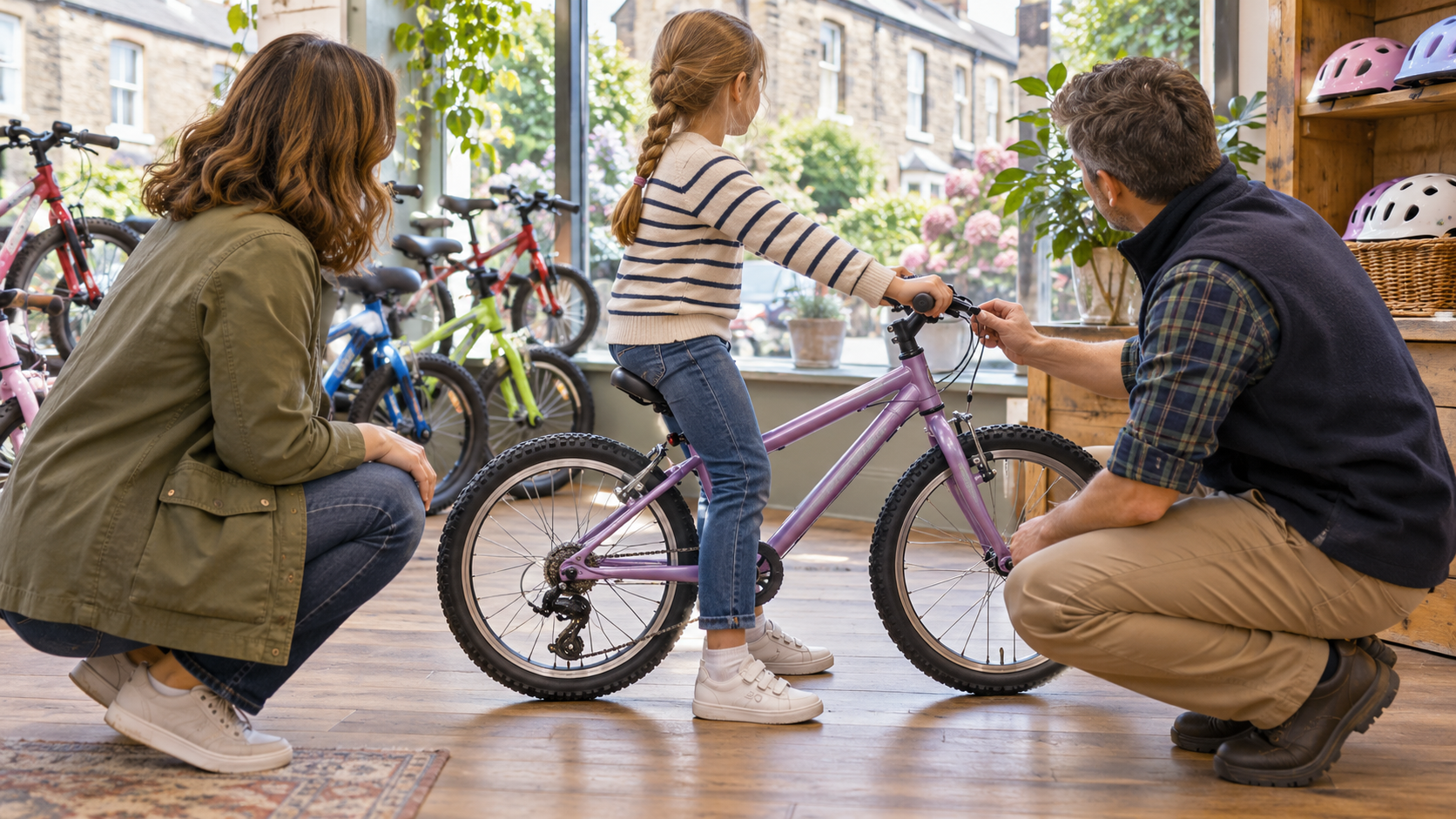
A practical shop fitting test
Begin with the saddle at an appropriate low position. Ask the child to sit, hold the grips and look forwards. Their shoulders should remain relaxed and their elbows slightly bent.
Check standover space where the frame design permits. The child should dismount forwards without landing painfully on the top tube.
Ask for a slow start, straight ride, controlled stop and gentle turn. Watch the hands during braking. If the fingers leave the grip to find the lever, adjust the reach or try another model.
Do not judge fit from one photograph. A short ride exposes reach, weight and confidence problems that static measurements miss.
Frequently asked questions
What wheel size does a five-year-old need?
Many five-year-olds fit 16, 18 or 20-inch bicycles. Measure the inside leg and compare the exact model’s minimum saddle height before choosing.
Is a 20-inch bicycle suitable for a six-year-old?
It can be, especially from an inside leg around 53 cm. The child must also reach the brakes, start independently and control the bicycle’s weight.
Should my child’s feet touch the ground?
Beginners should reach the ground securely enough to stop and start confidently. Experienced riders may use a higher saddle for a more efficient pedal stroke.
Is age or height better for choosing a children’s bicycle?
Inside leg is usually the strongest measurement, followed by height. Age provides only a broad guide because children of the same age differ considerably.
When should a child move from a balance bicycle to pedals?
Move when the child glides, steers and stops under control. Pedal readiness depends on balance and confidence rather than a fixed age.
How much growing room should a children’s bicycle have?
Choose safe control today with adjustment remaining in the saddle and controls. Do not accept poor braking, steering or ground reach in exchange for future growth.
Sources and fact check log
This appendix records the source used for each volatile or material claim. Recheck commercial data immediately before publication.
| Fact used | URL | Short source extract | Checked |
| Tyred calculator uses children’s inside-leg thresholds | https://tyred.io/tools/bike-size-calculator | “Bikes for children, by inside leg.” | 5 Nov 2026 |
| Height and inside leg are better guides than age | https://www.halfords.com/s/halfords-uk/bikes/kids-bikes/ | “Height and inside leg are typically a better guide than age.” | 5 Nov 2026 |
| Halfords height and wheel-size bands overlap | https://www.halfords.com/bikes/buying-guides/kids-bikes-buyers-guide.html | “117 – 126” and “16″ – 20″ Bikes” | 5 Nov 2026 |
| Minimum saddle height is decisive for exact fit | https://www.cyclesite.co.uk/kids-bike-size-guide | “minimum saddle height … should be no higher than the child’s inside leg” | 5 Nov 2026 |
| Frog sizing uses inside-leg measurement | https://www.edinburghbicycle.com/info/bike-sizing-guide/frog-bikes | “categorised according to the child’s inside leg measurement” | 5 Nov 2026 |
| Balance bicycle guidance and fit ranges | https://www.cyclingweekly.com/group-tests/best-balance-bikes-328326 | “adjustable saddle height that offers a good range” | 5 Nov 2026 |