
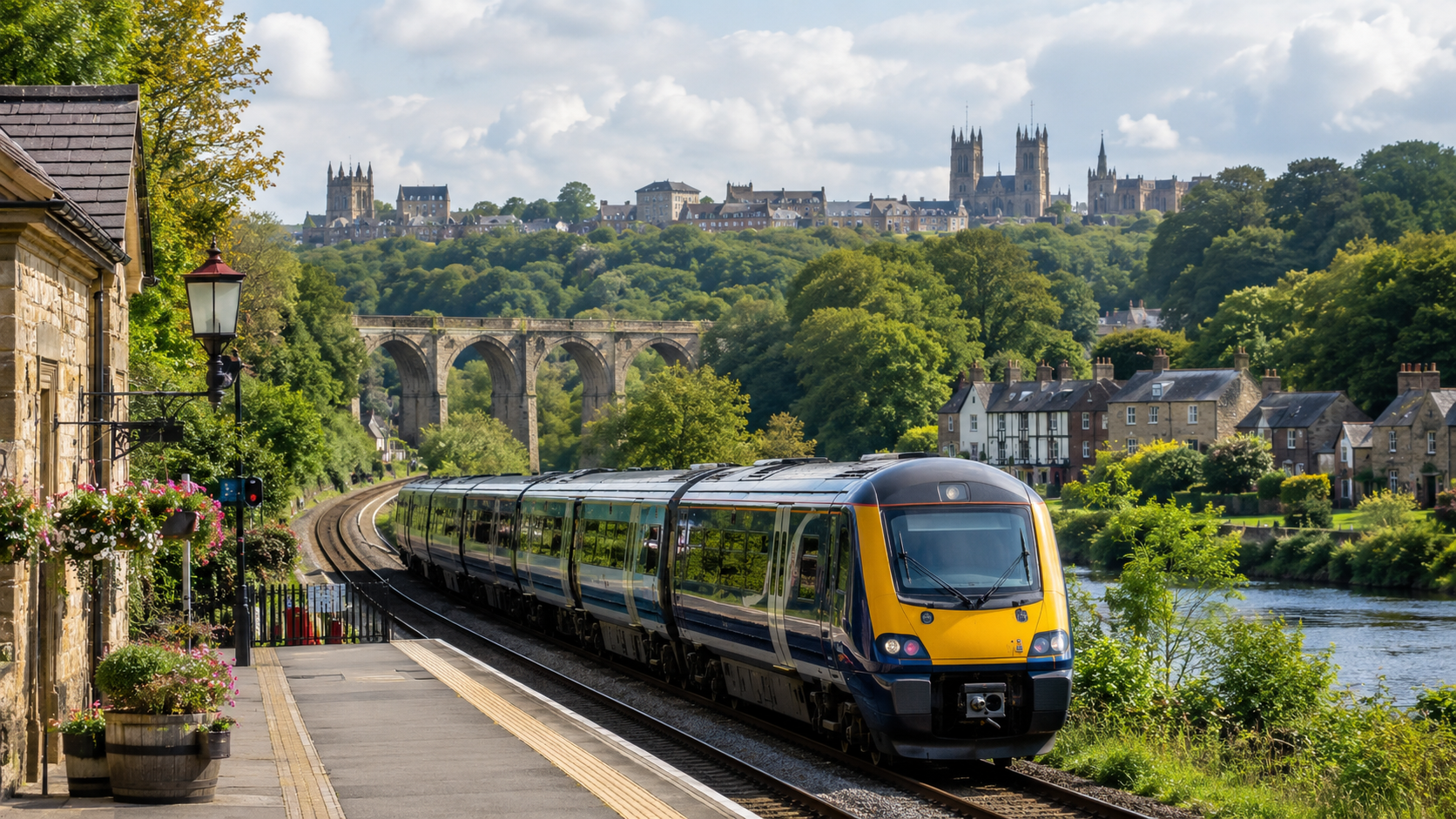

Train travel around Britain can look complicated when you first encounter different operators, ticket restrictions, Railcards, seat reservations and unfamiliar station names. In practice, the system becomes much easier once you understand a few basic rules. Britain’s National Rail network connects cities, historic towns, coastal destinations and rural regions across England, Scotland and Wales, while National Rail provides a central journey planner covering services across the network.
For beginners, the key is not learning every railway company. It is learning how to plan a journey, choose the right fare and leave enough flexibility for the kind of trip you want.
How Train Travel Around Britain Works
Britain does not operate as one single train company. Different operators run passenger services, but travellers can search journeys across the network through National Rail. Its Journey Planner provides routes, departure times, connections and fare information, while live departure tools show delays, cancellations and platform changes.
For a first trip, start with four pieces of information:
- Your departure station
- Your destination
- The date you want to travel
- Whether you value the lowest price or greater flexibility
That final choice often determines which ticket makes the most sense.
Understanding British Train Tickets
Ticket terminology is probably the most confusing part of train travel around Britain for beginners, but most visitors only need to understand three main fare types.
| Ticket type | Best for | Main restriction |
|---|---|---|
| Advance | Travellers with fixed plans | Valid only on the booked date and specified train |
| Off-Peak / Super Off-Peak | Flexible leisure trips outside busy periods | Validity depends on time, route and ticket restrictions |
| Anytime | Maximum flexibility | Usually more expensive, but offers the fewest time restrictions |
National Rail states that Advance tickets are sold in limited numbers and are valid for the specific train shown on the ticket. Off-Peak fares are designed for less busy travel periods, while Anytime tickets allow considerably more flexibility.
When should you buy an Advance ticket?
Advance fares are usually the first option to check when you know exactly which train you want. National Rail says they are normally released ahead of travel and may remain available much closer to departure on some routes, although availability varies.
The trade-off is flexibility. Miss the booked service for a reason not covered by your ticket conditions and you may need another ticket.
When is an Off-Peak ticket better?
An Off-Peak ticket can suit a sightseeing holiday because it may allow you to choose from several eligible trains rather than committing to one departure.
Restrictions are not identical everywhere, however. Always check the conditions attached to the specific fare instead of assuming “Off-Peak” means the same time nationwide.
Check Whether a Railcard Will Save You Money
Railcards are discount cards for eligible passengers travelling in Great Britain. Many offer savings of up to one-third on qualifying fares, although eligibility, minimum fares and time restrictions vary by Railcard.
Options include Railcards aimed at younger travellers, older passengers, disabled passengers, families and people travelling together.
A Railcard can make sense even during a relatively short holiday if your planned journeys are expensive enough to recover its purchase cost. Do the calculation before buying rather than assuming every visitor needs one.
“The easiest rail holiday is rarely the one with the most stops. Give yourself fewer bases, sensible connections and enough time to enjoy where the train actually takes you.”
BritRail Passes Can Be Useful for Overseas Visitors
International visitors planning several railway journeys should also compare ordinary point-to-point tickets with a BritRail Pass.
BritRail passes provide travel on the National Rail network in Great Britain, with options covering different geographical areas and travel periods. The Great Britain Pass covers England, Scotland and Wales.
There is an important eligibility rule: BritRail passes are intended for non-UK residents. BritRail states that people who have lived in the United Kingdom for the previous six months or longer are not eligible to purchase one.
A pass tends to be most attractive when flexibility matters more than securing the absolute lowest fare. If you are happy fixing every long-distance journey in advance, separate Advance tickets may sometimes work better.
Do You Need to Reserve a Seat?
Not every British train journey requires a seat reservation.
Reservations are available on many longer-distance services and are particularly useful during weekends, holidays and busy travel periods. National Rail says reservations can often be made until around two hours before travel, although arrangements depend on the service. They are normally free when made alongside the ticket.
If your ticket includes a specific reserved train, follow the service details printed or displayed on the ticket.
For sleeper trains, plan further ahead. VisitBritain notes that BritRail users travelling on services such as the Caledonian Sleeper or Night Riviera need prior booking.
Using Trains in London Is Slightly Different
London has its own urban transport payment system, so visitors should distinguish between long-distance National Rail tickets and everyday travel within the capital.
Transport for London says contactless bank cards or devices and Oyster cards can be used for pay-as-you-go travel across its transport network. TfL describes contactless or Oyster pay as you go as one of the easiest ways to travel around London.
Do not assume contactless payment works on every railway journey across Britain. Its use on National Rail extends beyond London in certain areas, but coverage is not nationwide.
For a London-to-Edinburgh-style intercity trip, for example, buy an appropriate rail ticket rather than simply expecting to tap a bank card at both ends.
A Sensible First British Rail Itinerary
Beginners often make the mistake of trying to cross the country every day. A better strategy is to choose several bases and take either direct journeys or simple connections between them.
A first-time itinerary could combine:
London for major museums and landmarks, followed by a northern historic city such as York, several nights in Edinburgh, and then another region depending on your interests.
Alternatively, build a southern trip around London, Bath, Cardiff and nearby destinations.
The exact sequence matters less than avoiding unnecessary backtracking. Before booking hotels, enter the proposed legs into the National Rail Journey Planner and check both travel time and the number of changes.
A two-hour direct train is very different from a similar-distance journey involving several connections.
Travelling With Luggage
Train travel removes airline-style baggage check-in from most journeys, but carrying less still makes life considerably easier.
National Rail says passengers can generally bring up to three items of luggage without an additional charge, although individual train companies can apply their own policies.
On crowded trains, large suitcases can be awkward. Keep valuables with you, use overhead racks for smaller bags when appropriate and avoid blocking aisles or doors.
If your holiday involves moving hotels every night, luggage can quickly turn an enjoyable rail trip into a logistical exercise. Staying two or three nights in each base is usually more comfortable.
Always Check Your Train Again Before Departure
Engineering work is a normal part of railway operation, especially around weekends and holiday periods.
National Rail advises passengers to check its Journey Planner for current journey information and its disruption pages for planned engineering work, altered timetables and rail-replacement services.
Check once while planning and again shortly before leaving your accommodation.
Also look at the departure screens when you arrive at the station. Platforms can change, and National Rail’s live tools provide real-time departure, arrival and platform information.
What Happens If You Need Assistance?
Passengers who need help navigating stations, boarding trains, changing services or using a boarding ramp can request Passenger Assist.
National Rail says one train company can arrange assistance across an entire journey even when the passenger travels on multiple services.
This is particularly useful for passengers with mobility requirements or anyone concerned about complicated station changes.
Common Beginner Mistakes to Avoid
The most expensive mistakes are usually simple ones.
Do not board an earlier or later train simply because it travels to the same destination if you hold a train-specific Advance ticket.
Do not assume every Off-Peak ticket has identical restrictions.
Do not rely on contactless payment outside its supported area.
And avoid planning short connections simply because a booking system technically offers them. Extra breathing room is valuable when you are unfamiliar with a station or travelling with luggage.
FAQs About Train Travel Around Britain
Is train travel around Britain easy for beginners?
Yes. The ticket system takes some getting used to, but National Rail provides one central journey-planning service covering the rail network in Great Britain, along with live departure and disruption information.
Is it cheaper to buy British train tickets in advance?
It can be. Advance tickets are designed for specific trains and are sold subject to availability, making them an important fare to compare when your plans are fixed.
Can tourists buy a BritRail Pass?
Yes, provided they meet the residency rules. BritRail says its passes are available to non-UK residents, while people who have lived in the UK for six months or more are not eligible.
Can I use contactless payment on every British train?
No. Contactless pay as you go is widely used in London and extends to some National Rail routes beyond London, but it should not be treated as a nationwide payment method.
Do British trains allow luggage?
Generally, yes. National Rail says passengers may normally bring up to three pieces of luggage without charge, although operator-specific conditions can differ.
Do I need to reserve seats on British trains?
Not for every journey. Reservations are available on many services and are sensible for busy long-distance trips. Some specific tickets or services have their own reservation requirements, so check the conditions when booking.
Conclusion
Successful train travel around Britain is less about understanding every railway rule and more about making a few good decisions. Use National Rail to plan and recheck journeys, compare Advance, Off-Peak and Anytime fares, investigate Railcard or BritRail savings, and avoid packing too many destinations into one itinerary.
Once those basics are in place, travelling by rail becomes one of the simplest ways to experience several parts of England, Scotland and Wales without repeatedly hiring cars or navigating airports.
Read also Risks and Disadvantages of 5G Home Broadband: What to Know Before Switching